My Thoughts on Trollope’s Barchester Chronicles Series

C81F3EA5-047A-43D8-BD76-D27F8A7D6BFF.jpeg

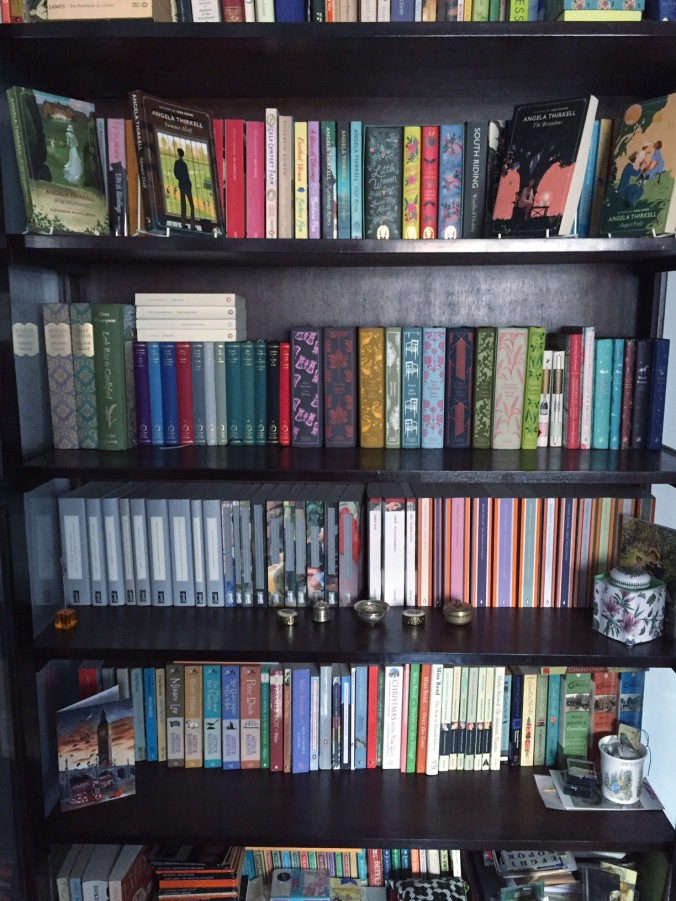
It took me two years, but I’m pleased to say that I’ve finally finished the set of six novels that collectively form the Barchester Chronicles series.

The genre of novels I enjoy, mostly modern classics written by women, tending to focus on matters of home and hearth and human psychology, frequently referred back to this seminal work by Trollope. So, for this reason I was eager to discover his writing. A group of fellow Trollope enthusiasts who decided to readalong with me, enabled me to finally find out what all the fuss was about.


The Chronology of the Barchester Novels

The six books in the series, in chronological order consist of The Warden, Barchester Towers, Doctor Thorne, Framley Parsonage, The Small House at Allington and lastly, The Last Chronicle of Barset.


Favourite Books in the Barchester Chronicles Series

It’s hard to pick favourites, but if I was compelled to, I would choose The Warden for being memorable and the Last Chronicle of Barset due to its poignant, soul-searching subject.


The Subject Matter of the Series

Though the focus of each individual novel differs, on the whole, the series addresses problems within the ecclesiastical system of Victorian England. Trollope pinpoints various gaping defects in church matters in the obvious hope for reform. The clergy are depicted as flawed individuals, sometimes greedy for power, sometimes prone to  earthly pleasures like other mortals. In this sense, the world that Trollope paints is incredibly real and believable.

Trollope’s female characters are no mealy-mouthed individuals. They have plenty of spunk, force of character and show that they can and will marry for love alone. For this reason the names of Lily Dale, Mrs Proudie and Eleanor Bold are memorably penned in the annals of Victorian literature.

In short, without revealing too much of the plot, here is what each individual novel focuses on:

The Warden

‘The Warden’ takes place in a fictional cathedral town in Victorian England-Barchester. It highlights the plight of an elderly man, a church employee. As he is suddenly thrust into the middle of a much publicized national scandal surrounding his (suspected) inflated salary, thereby cheating several bedesman, under his direct care, out of the stipulated income in an old will. It is a story involving several Victorian institutions: the government, the press, the church, the law, and several tiers of society. But at the heart of the matter, it is the story of a man’s desire to quell his conscience.

Barchester Towers

‘Barchester Towers’ takes us back to the hallowed precincts of Barchester, a few years after where ‘The Warden’ left off. The main plot centres around three key events- the position of Warden at Hiram’s Hospital is still unoccupied, the Bishop of Barchester is on his deathbed and John Bold has left for his heavenly abode.

There is a struggle for ecclesiastical power which highlights the power hunger greediness of the clergy.

Another plot line is that of the love interests of newly widowed Eleanor Bold- who unfortunately falls prey to several bachelors, some of who are interested in acquiring Eleanor’s substantial private income.

Doctor Thorne

Doctor Thorne is one of the most romantic books in the series and deals with the story of Frank Gresham and Mary Thorne. Frank Gresham is the son of a bankrupt landowner, so it is highly derrière by his family that he marry for money to revive the family’s fortunes. However, he falls in love with a lovely girl, Mary Thorne, said to be illegitimate and certainly with no claims to fortune. The story has an excellent twist and is highly readable.

Framley Parsonage

This, the fourth book in the series deals with the ambitions of a young clergyman, Mark Robarts, who quite naively strives to climb the social ladder and lands himself in woeful monetary trouble due to the dubious company he keeps.

The Small House at Allington

The main issue that the novel deals with is the question of whether or not a person should marry solely for the purpose of money. The two sisters in the novel have two very distinct personas. There is Lily Dale- a Victorian version of Elizabeth Bennet/Marianne Dashwood (bubbly and impetuous) and we have the more cautious figure of her sister Bell. Each of the sisters is part of a unique love triangle. The novel largely deals with the love interests of each sister.

Virginia Woolf describes ‘The Small House at Allington’ as perhaps ‘the most perfect of English novels’ alongside Austen’s ‘Pride and Prejudice’.

The Last Chronicle of Barset

The last book in the Barchester Chronicles and Trollope’s most soul-searching, heart-rending book about a man’s effort to preserve his integrity in the face of extreme adversity.


Who Should Read This Series?

Readers Who Love a Good Love Story

Trollope is surprisingly eloquent when he expresses the feelings of love between men and women. Nearly each novel has a central love theme and Trollope waxes quite lyrically during the innumerable love scenes.

Readers Who Enjoy Long Detailed Novels

The Victorians loved their long novels, many of which were published in serial format in many reputed newspapers and journals of the time. Trollope is no exception to the rule. The Warden is the only slim volume in the pack.

Readers Who Love Cozy, Comforting Books

People might be taken aback by the length and breadth of Trollope’s bibliography, but fear not! Trollope’s writing is incredibly comforting and cosy. Once you get used to the Victorian language, the writing is very easy to follow,

Readers Who Love Learning About Details of Victorian Living

How Victorians dressed, what they ate, their education and most importantly, how they managed their money, are all subjects of interest in these novels.


Favourite Quotes

What on earth could be more luxurious than a sofa, a book, and a cup of coffee?…Was ever anything so civil?” – The Warden


“Don’t let love interfere with your appetite. It never does with mine.”- Barchester Towers


“There is no happiness in love, except at the end of an English novel.”- Barchester Towers


“Rest and quiet are the comforts of those who have been content to remain in obscurity.”- Doctor Thorne

“And, above all things, never think that you’re not good enough yourself. A man should never think that. My belief is that in life people will take you very much at your own reckoning.”- Small House at Allington

Further Reading

If you enjoyed Trollope’s ‘Barchester Chronicles’, the good news is that he wrote lots, lots more novels- over and above 50 novels! Other Victorian writers who come to mind who remind me of Trollope are Mrs Gaskell and Dickens- although Trollope’s characters ate more middle-class than Dickens’ poor people. The novelist who perhaps was the most influenced by Trollope was George Eliot.

Later Angela Thirkell set her series of loosely linked novels in the fictitious county of Barsetshire. Several Trollopian characters reappear in different avatars in her books, Great fun!


Trollope was one of the most prolific of Victorian writers. Her wrote exactingly and untiringly about the quotidian details of provincial life. And he sought to highlight some glaring flaws in ecclesiastical order. He deserves to be read more widely by modern audiences.
Top 10 Books of 2017


4E627E54-56FD-43B5-85FF-7ABC115D6423

Looking back on 2017, I see a wonderful list of books and honestly I can’t say that I regret reading a single one of them. In this particularly good year of reading (52 books in the year) a few stood out to me.


These are the ten books that left the most indelible impression on me in 2017:

1. Mariana by Monica Dickens

A coming of age novel dealing with a young girl’s quest to find the perfect love. Though the body of the novel is well written and engaging, it is the beginning and ending of the novel that elevate the quality of the story in my opinion, making it truly memorable. There are echoes of Tennyson’s poem ‘Mariana’ in this book.

2. Miss Buncle’s Book by D.E. Stevenson

What a delight of a novel. The characters are excellent, the plot immaculately constructed and the writing is very funny.

A young woman, Miss Barbara Buncle opts to become a novel writer when her annual dividends are not as lucrative as usual. As the young lady has no imagination whatsoever, she writes completely from experience, portraying the people and incidents occurring in her rural corner of England. When the village people read the book and discover themselves (in an unflattering light) in the pages of the story, they determinedly set out to uncover the identity of the perpetrator of the village crime.

3. My Cousin Rachel by Daphne du Maurier

This might be my new favourite du Maurier novel alongside Rebecca. It kept our book club continually guessing (we are still unsure to this day). Apart from the suspenseful aspect of the novel, I enjoyed the Cornish setting and the gothic feel of the story.

4. One Fine Day by Mollie Panter-Downes

This was such a quiet, wistful novel, spanning the events of one particular day. It deals with the struggles of the post-WW2 upper-middle class, coming to terms with the loss of their glorious past and changing domestic situations.

5. The Woman in White by Wilkie Collins

A suspenseful, fast-paced Victorian novel and a pre-decessor of the modern day thriller, although in my opinion, much better written than most of the modern-day bestsellers.

6. Mrs Dalloway by Virginia Woolf

Hard to describe Mrs Dalloway. Perhaps to me- it strikes as a poem of a novel talking about deep-seated issues – some of them related to mental health. The descriptions of  London in the novel are glorious.

7. Earth and High Heaven by Gwethalyn Graham

Set in Toronto during World War 2, Earth and High Heaven deals with the then frowned upon love affair between a Canadian English woman and a Canadian Jewish man. The book is an elaborate social commentary on racial prejudice. It shows how people born into a fixed social pattern can overcome centuries of difference, in an overwhelming desire to embrace the most unifying emotion of all- love.

8. The Last Chronicle of Barset by Anthony Trollope

The last book in the Barsetshire Chronicles and Trollope’s most soul searching, heart-rending book about a man’s quest to preserve his integrity in the face of extreme adversity.

9. My Grandmothers and I by Diana Holman-Hunt

A memoir written by the grand daughter of the eminent pre-raphaelite painter William Holman-Hunt. It tells of her unusual upbringing, alternating in the homes of her paternal and maternal grandmothers. It is a wonderful chance to glimpse into the eccentric lifestyle of Holman-Hunt. It’s also a rather poignant memoir written in a cheerful way, from the viewpoint of a young girl, who was essentially an orphan and who never knew the comfort of a stable home.

10. Ruth by Elizabeth Gaskell

The subject of this Victorian novel had quite a modern tone. It dealt with illegitimacy and the strictures of Victorian society and religion. However, what I appreciated the most about this novel was the fact that the pain and suffering, the vulnerability of a young orphan girl was highlighted, thus painting her plight in a very sympathetic way.

Please leave me a comment sharing your favourite book of the year.

Here’s to many more books in 2018.

The Fulfillment of a Literary Dream- Helene Hanff’s ‘Duchess of Bloomsbury Street’

image.jpeg

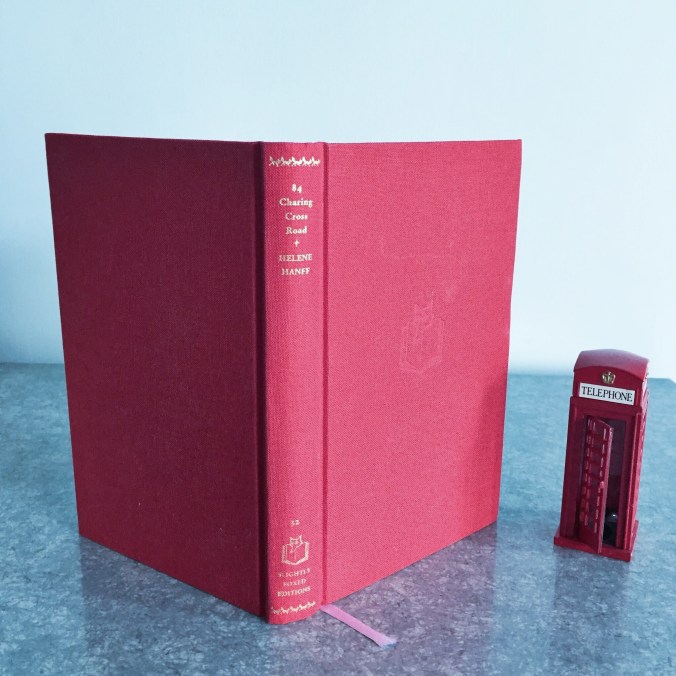
If you’ve read 84 Charing Cross Road, you’ll appreciate that Helene Hanff’s trip to London, the city of her literary dreams is the realization of a life-long ambition. Brought on by the success of the book describing her long-distance relationship with antiquarian bookseller Frank Doel, this journey is more than a literary pilgrimage, it is a homage to the quiet, bookish man who sparked the inspiration for the book itself. 

‘The Duchess of Bloomsbury Street’ starts in the summer of 1971, with author Helene Hanff preparing to fly the Atlantic Ocean, in order to visit London, the city of her literary dreams.

The realization of this dream has been a long time in the making. It all started out with a correspondence between Hanff in New York and Frank Doel, an antiquarian bookseller in London. The correspondence spanned a number of decades and has been beautifully documented in Hanff’s memorable book ’84 Charing Cross Road’, the address of Doel’s bookshop.

The untimely death of Frank Doel resulted in Hanff’s personal tribute to the quiet but learned, kind, compassionate man with the publication of ’84 Charing Cross Road’.

In the ‘Duchess of Bloomsbury Street’, we find Hanff travelling to London to mark the launch of the British edition of ’84 Charing Cross Road’. It had always been her dream to visit literary London, but had previously been impossible due to financial constraints (in 84 CCR we learn that dental bills were partially responsible for this!).

This second book is the diary that Hanff kept during her wonderful weeks in London. If you love books and you love London, you will delight in the literary tour-de-force that Hanff takes you on, from Dickens to Donne.

This book is more than a literary tour however and does not completely project a rosy image.

It is a chance to meet with the widow of Frank Doel and this meeting is not completely free of pathos and poignancy.

The book is also peppered with Hanff’s acute observations of British life and manners. There are frequent aspersions to class distinction and snobbery.

You look at the faces in the Hilton dining room and first you want to smack them and then you just feel sorry for them, not a soul in the room looked happy

There is another isolated incident of a lady walking her poodle in Hyde Park. Hanff greets the poodle but is deterred by the sharp rebuke from the lady.

” Please don’t do that!” she said to me sharply. “I’m trying to teach him good manners.”

I thought, ” A pity he can’t do the same for you”.

Despite these observations, Hanff, intelligent and highly observant, realizes that of course, there is more to London than the ‘reek of money’.

Around every corner, there is the “hallowed hush of privilege … stories of the fairy-tale splendour of monarchy, the regal pomp of England’s Kings and Queens”.

And as Hanff so acutely observes, history is alive and flourishing in London.

image.jpeg

10 Contemporary Authors I Enjoy Reading

image.jpeg

I am a bit of an old soul. Though I may be physically present in the now, my mind flitters off away into bygone eras- the heyday of the 1920’s, the Depression of the 1930’s or the tumultuous times of the Great and Second World Wars. I wonder what it must have been like to live in the Regency, Victorian or Edwardian periods or in Imperial Russia.  If only I could travel back in time armed with a  package of antibiotics and an iPad!

It is quite natural that my reading should be centered on mostly writing from these periods and genres.  That is not to say that I do not enjoy a few contemporary authors and I hope to build on that list in the following years. Ironically, most of these authors write of bygone eras or have an old-fashioned way with words.

Here in no particular order are a few of my most read, contemporary authors:

1) Alexander McCall Smith:

McCall Smith is perhaps my most beloved contemporary author. I’ve enjoyed delving into both his Isabel Dalhousie series and 44 Scotland Street series, both set in Edinburgh. I’ve also enjoyed the simple stories of the Mme Ramotswe set in Africa. His stories have a simple charm, offer great minute details into daily life and a dry humour. He reminds me of a male Barbara Pym or a modern day PG Wodehouse.

2) Kate Atkinson:

I read Atkinson’s ‘Life after Life’ which was a stunning novel written in an unusual format telling of an individual’s experience of the second World War. There was great depth to the historical detail provided by Atkinson’s storytelling. I cannot wait to read more.

3) Jacqueline Winspear:

If you like the ‘cozy mystery’ genre and if you enjoy historical fiction, then Winspear’s Maisie Dobbs series is for you. I appreciate Winspear’s great attention to historical detail and exacting prose. She has an eye for documenting the minutia of everyday life.

4)Peter Mayle:

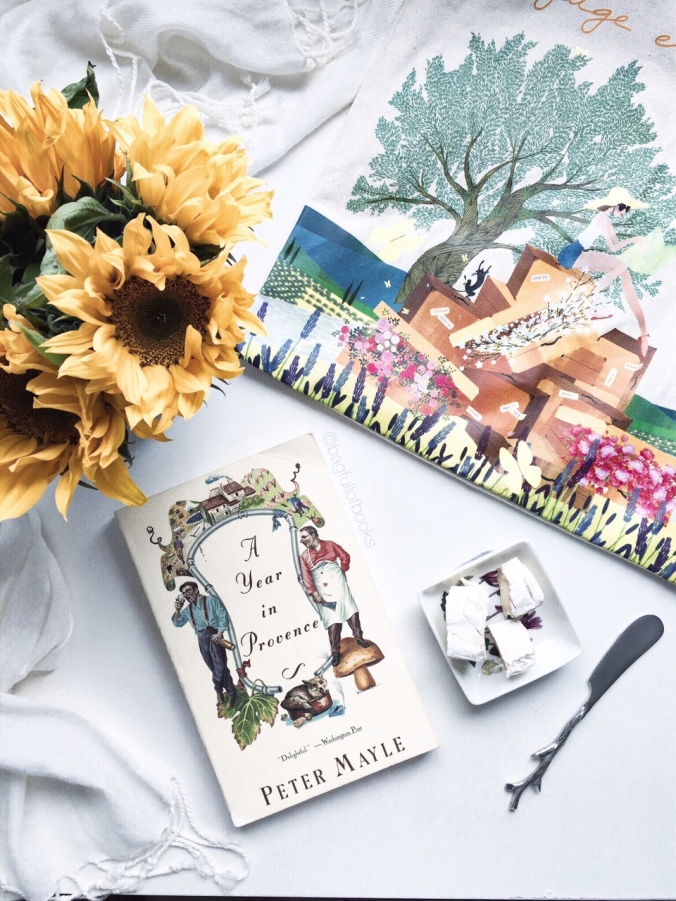
There are a number of books describing expat life in the South of France, but few do so as evocatively as Peter Mayle. All the sights, sounds and flavours of Provençal life are embodied in his sunny, descriptive prose.

5) Paula McLain:

I greatly enjoyed McLain’s novel .’The Paris Wife’, providing a fictional (yet quite believable) account of Hemingway’s life in Paris from the perspective of his first wife Hadley. The narrative is smooth and free flowing and very engaging.

6) PD James:

I remember being quite absorbed with PD James’ Cordelia Grey mystery, An Unsuitable Job for a Woman. Though decidedly gritty, it was one of those mystery/thrillers that you really cannot put down.

7) Colin Dexter:

Dexter weaves a wonderful web of mystery and history on the streets of Oxford in his Inspector Morse series. They are fast, intelligent and absorbing reads.

8) Helen Fielding:

I grew up reading Fielding’s entertaining ‘Bridget Jones’s Diary’. I have a great love for the epistolary format of storytelling and Fielding’s depiction of a modern day ‘Pride and Prejudice’ scenario is both refreshing and extremely funny.

9) JK Rowling:

Where would we be without the magical world Rowling has created in her Harry Potter novels? Just as I grew up with the magic of Enid Blyton and CS Lewis’s stories, many generations of children have already grown up with the comfort of the mystical realm of these fantasy novels.

10) Vikram Seth:

I do believe that Seth’s magnum opus ‘A Suitable Boy’ will be a classic that will be remembered and loved many years from now. Not only is his prose lovely, the scope of his novel is quite breathtaking and true to the narrow slice of historical time he has depicted in post- Independence India.

An Equal Music is another favourite book of mine.

Other authors I wish to read soon are  Donna Tartt, Murakami, Adichie and many others.

Tell me, who your favourite authors are, who are living in the present day and age?

Five Little Pigs by Agatha Christie

image.jpeg

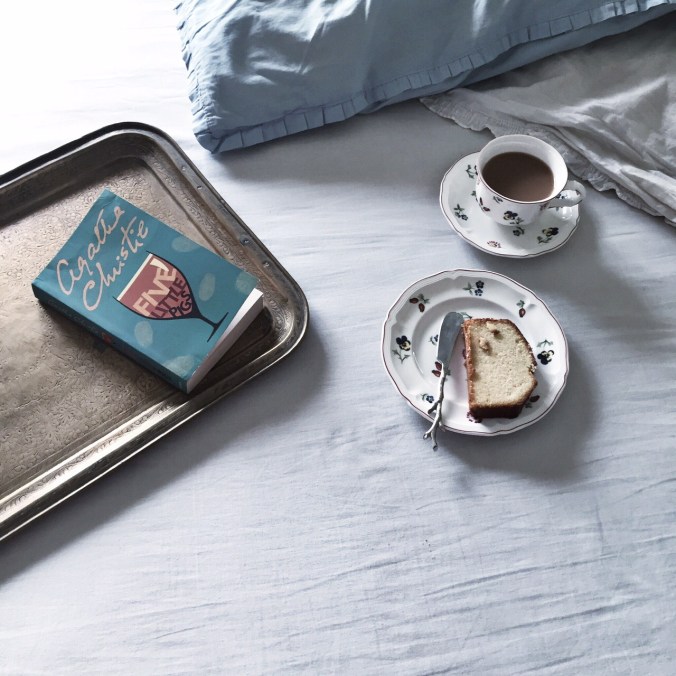
‘Five Little Pigs’ deals with the story of a woman who has been convicted and killed for the murder of her husband- the reputable bohemian artist Amyas Crale. Caroline Crale, his wife, is sentenced to death for poisoning her husband, by lacing his drink with the lethal poison coniine. While all the clues point towards Caroline Crale as having committed the crime, in a posthumous letter to her daughter, Caroline admits her innocence.

Caroline’s daughter comes into possession of her mother’s letter  after coming of age. Upon reading its contents she asks the famous detective Hercule Poirot, to investigate the facts of the case and thereby rescue her mother’s name from ignominy.

After Poirot learns of all the facts, he concludes that there are five likely suspects. He likens their personas to the five little pigs of the nursery rhyme.

There is the long time family friend Phillip Blake (a stick-broker- ‘this little pig went to market’), his brother, the reclusive Meredith Blake (amateur herbalist-‘this little pig stayed at home’), Elsa Greer, Amyas’s greedy lover (‘this little pig had roast beef’), impoverished governess Cecilia Williams (‘this little pig had none’) and lastly, the wronged and disfigured step-sister of Caroline Crale-Angela Warren (‘this little pig cried all the way home’).

Sixteen years have passed, but Poirot is determined to unveil the truth behind the murder.

There are a number of people with motives: Caroline Crale was jealous of her husband’s affair with Elsa Greer and is therefore, the prime suspect.

As with all Christie novels, this mystery has you guessing till the last moment. The story is told beautifully from multiple personal narratives and points of view.

‘Five Little Pigs’ has a very good plot and this one in particular is all about understanding the psychology and emotions of the players.

I did miss Hastings and Inspector Japp, however, and Poirot’s musings were shown to a lesser extent than in other novels. Despite that, ‘Five Little Pigs’ is one of those Christies that must be read if you are a fan of her work.

Title: Five Little Pigs

Author: Agatha Christie

First Published: 1942

Setting: Alderbury Estate, Devonshire, England

Main Characters: Hercule Poirot, Amyas Crale, Caroline Crale, Elsa Greer, Phillip and Meredith Blake, Cecilia Williams, Angela Warren

Mrs Dalloway by Virginia Woolf: First Impressions

image.jpeg

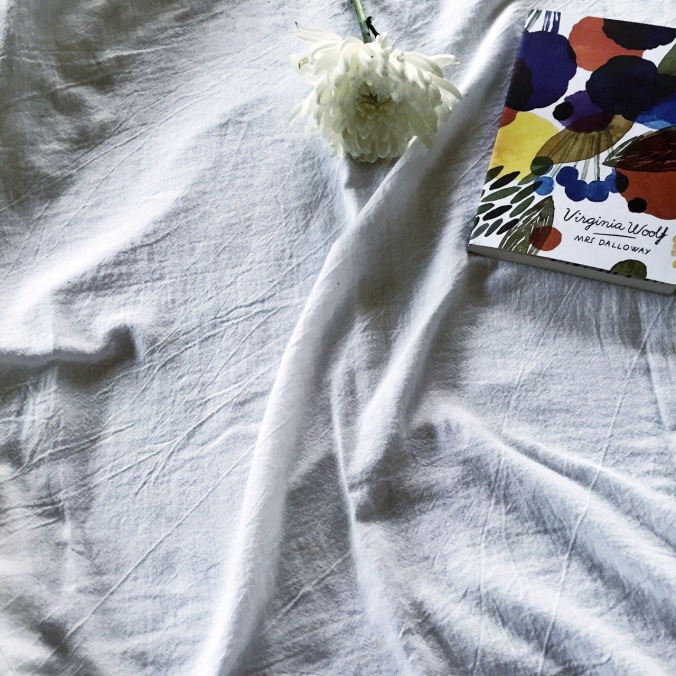
‘Mrs Dalloway’ by Virginia Woolf, follows a day in the life of Clarissa Dalloway, middle aged, graying wife of eminent British politician, Richard Dalloway. It is no ordinary day, however. It is the day on which Clarissa will host a glittering evening party, where the creme-de-la-creme of British high society, including the Prime Minister himself, will grace the Dalloway’s Westminster residence.

The novel in its most simplistic form can be viewed as a day in the life of a lonely, married woman but it is so much more than that. It is a novel dealing with many topics of far-reaching significance, not limited to mental illness, the aftermath of the First World War, class structure and homoerotic love.

The narrative structure switches fluidly from the third person to the first person, giving the reader an intimate view of the external and internal worlds of the characters in the novel. The use of free indirect discourse makes us privy to moments of flawless and breathtaking intimacy.

The novel (originally called ‘The Hours’) is leant great structure by the division of the hours of the day by the regular, metallic intonations of Big Ben’s chimes. The regular reverberations help to provide pause to a novel, otherwise lacking in chapters or page breaks- ‘the leaden circles dissolved in the air’.

Despite the novel covering the incidents encompassing a single day, we find time expands and we effortlessly dip into Clarissa Dalloway’s past- her memories at Bourton and the friends she had in her youth. We meet her childhood sweetheart Peter Walsh and also the love of her life Sally Seton. We also meet Richard Dalloway, whom she eventually decides to marry.

The plot of the novel is rather loose but it holds the threads of the stories of several individuals who are directly or indirectly related to one another.

There is the thread of former sweetheart Peter Walsh, freshly returned from India, and trying to secure the divorce of a fresh flame- a married woman in India. He briefly visits Clarissa on the morning of her party and is struck with how much he still loves her.

There is the thread of Richard Dalloway, who shares a sterile yet companionable relationship with his wife of many years. There is a memorable moment when he spontaneously decides to bring Clarissa flowers in the afternoon but despite exerting considerable effort, finds himself unable to tell her that he loves her.

Then there is the thread of daughter Elizabeth Dalloway and her relationship with tutor Miss Kilman. Clarissa finds herself disturbed with their close relationship whereas staid Richard Dalloway brushes it off as being nothing.

Most importantly there is the thread of Septimus Warren Smith, war veteran, victim of shell shock and his Italian wife Lucrezia Warren-Smith. Theirs is a poignant story, where the wife recognizing signs that her husband has lost the will to live, battles to secure his mental well-being and lives in constant fear that he will take his own life.

The collective threads of the story are brought together in climax at Clarissa’s evening party, when Peter Walsh, Sally Seton, other friends, family and members of the Dalloway social circle (including Septimus’ physician Sir William Bradshaw) congregate at their home. It is here that the news of Septimus Warren-Smith’s death by suicide  reaches the ears of Clarissa. Her spontaneous reaction to the news is one of annoyance that the Bradshaws should sully the mood of her party with this unwanted piece of information. By being privy to Clarissa’s inner thoughts we witness her raw, self-centred but honest reaction to the death of a man she never knew. Despite her jarring initial reaction, we later find Clarissa, drawing away from the party and musing privately about the life of the man and the circumstances of his death.

In a way Woolf uses ‘Mrs Dalloway’ as a medium to criticize the treatment and understanding of mental health issues, a subject that was very near to her heart.

Perhaps parts of Woolf herself are strewn in bits and pieces across the broad scope of the novel. She inhabits the personas of many of her main characters but it is evident that she doesn’t wholly inhabit any of them. She and Leonard Woolf are not as upper middle class as the Dalloways, neither is she the slightly mindless socialite that is Clarissa Dalloway. Woolf does share the mental issues of Septimus Warren- Smith ,however, and traces of her relationships with men and women are to be found in ‘Mrs Dalloway’.

‘Mrs Dalloway’ is a book that I have a feeling I will read many times, to distill further insights and information upon successive  readings. Moreover, delving into that beautiful prose is a treat unto itself, even though the reading experience is not the easiest.

Title: Mrs Dalloway

Author: Virginia Woolf

First published: 1925

Characters: Clarissa Dalloway, Richard Dalloway, Peter Walsh, Sally Seton, Septimus Warren-Smith

Wild Strawberries by Angela Thirkell

image

Young Mary Preston has been invited to spend the summer at the sprawling country estate of  Rushwater, belonging to Lady Emily Leslie. ‘Wild Strawberries’ is the story of that very idyllic time, Mary Preston’s romantic entanglements and the summertime activities of the landed country gentry.

Rather than being made to feel like the poor relation, down and out on her luck, Mary is welcomed by her Aunt Agnes (Aunt by marriage) and Aunt Agnes’ mother- the very vague but likable character of Lady Emily. Aunt Agnes and Lady Emily have secret plans to forge a match between Mary and the widowed second son of Lady Emily- John Leslie. Despite John cutting a very tragic figure, there are more Mr Leslies’ for Mary to contend with. There’s the youngest son- David Leslie, charming but rather unreliable. Will Mary be able to follow the true callings of her heart during this glorious summer at Rushwater?

‘Wild Strawberries’ was a beautiful, bucolic summer read.  What really endeared this book to me were its host of rather wonderful characters: the vague Lady Emily forever looking for something, the doting young mother Agnes, always making excuses for her children’s behaviour and flitting about without a care in the world, the charming self-centred playboy David Leslie and the mature, thoughtful mannered widower John Leslie.

Throw in the French neighbours, the pompous figure of Mr Holt, a few midnight balls, summer walks and shopping trips down to London and you have the makings of yet another stellar read from the very funny Angela Thirkell.

As with other Thirkell novels, the beauty of the novels don’t lie in the weak plots but in the rather full bodied, lovable characters. They have mannerisms and flaws in their characters but they are always very believable. Thirkell imparts to them such well timed, comedic humour that these books are a joy to read.

Title: Wild Strawberries

Author: Angela Thirkell

Published: 1934

Setting: Rushwater Estate, Barsetshire, England

Characters: Mary Preston, Aunt Agnes, Lady Emily, John Leslie, David Leslie, Madame Boulle, Joan Stevenson, Gudgeon.

The Tenant of Wildfell Hall

image.jpegStartlingly, ahead  of the time, this is a story dealing with the themes of drunkenness and debauchery and the strong will of a Victorian woman, determined to change her fate.
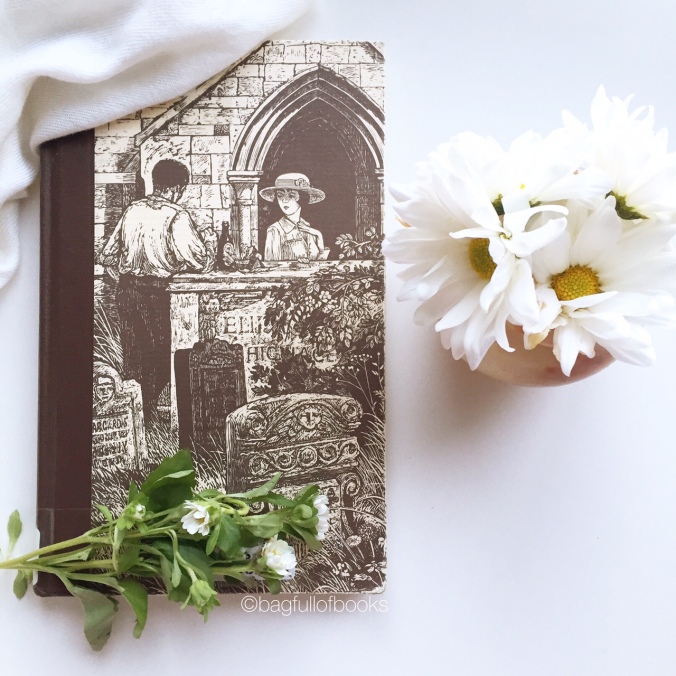
Anne Brontë’s writing deviates from both her sisters, in having an air of realism in it’s narrative  The style is wonderfully lucid and the storytelling very proficient.

The Plot of the Tenant of Wildfell Hall

The ‘Tenant of Wildfell Hall’ tells of the story of a young mother, Helen Graham and her small son, who quite mysteriously come to live one day at the quite dilapidated Wildfell Hall. The neighborhood is thrown into quite a tumult and everyone is quite curious to know more about Helen Graham’s personal history and how she came to be alone.

Helen’s reclusive air and dislike for company, added to the resemblance of her son Arthur to the local Mr Lawrence, further fuels nasty rumors. The gossip reaches the ears of landowner and farmer Gilbert Markham.

Gilbert forms a close friendship with Helen Graham. The friendship threatens to assume a more romantic turn and Helen tries to discourage Gilbert’s amorous efforts. However, one day she is compelled to reveal the mystery of her past by letting him read her lengthy diary entries.

Upon reading the diary, Gilbert comes to know of her tragic married history. Married to an alcoholic and abusive husband named Arthur Huntingdon, Helen is forced to flee from the persecution of her husband in order to protect her son.

It is quite a modern story and I imagine, must have shocked Victorian audiences when it was published in 1848. To have a woman, openly resisting her husband’s torture, trying to live separately and capable of acquiring an independent means of income, was certainly ground-breaking for the time.

I enjoyed the story overall but had a minor quibble with the weak narrative device- that of a letter written by Markham to a friend describing all events and including the lengthy diary.

One can’t help wondering, with the literary genius that Anne Brontë and her sisters had, what kind of works they would have produced in later life, if they had been permitted to live longer.

  • Title: The Tenant of Wildfell Hall
  • Author: Anne Brontë
  • Date published: 1848
  • Setting: Yorkshire, England, 1827.
  • Characters: Helen Graham, Gilbert Markham, Arthur Huntingdon.

Cluny Brown by Margery Sharp

img_5935

The Charming  and Unusual Story of Cluny Brown

‘Cluny Brown’ by Margery Sharp was just as quirky, just as delightful and just as thoughtful as Sharp’s other books. The book leads us through the life of an unusual girl who prefers to tread down the unconventional path in life.

In the story we are introduced to an orphaned young lady called Cluny Brown. She’s quite an interesting character, memorable, like Sharp’s other protagonists.

But she has one serious fault- she doesn’t seem to know her ‘place’ in the world- at least according to her Uncle, Mr Porritt and her interfering Aunt Addie. Just as an example, she’s been known to have had tea at the Ritz, which according to them, is seen to be vastly above her station.

She works as a phone receptionist of sorts for her plumber-uncle. And though she gets into a few scrapes along the way, things come to a serious head when she actually goes to visit one of her uncle’s clients, tries to fix the plumbing herself, and is discovered in a compromising position by who else than her uncle.

Her Uncle and Aunt Addie decide that enough is enough and Cluny must go into some sort of service and find her own way in the world. And so when the position of a house maid comes up in a respectable, rich household in the country, Cluny is sent on her way without giving her a chance to demur.

It seems Cluny has (according to the employment bureau) all the attributes of the perfect parlour-maid – ‘height, plainness and a perfectly blank expression.’ What they don’t account for is her personality!

So Cluny arrives at the expansive Devonshire estate of Friars Carmel. There’s a Lord Carmel of course, a Lady Carmel, a privileged only son, Andrew, recently down from Cambridge and to provide variety, a Polish man of letters called Adam Belinski, who is seeking cover from the Nazis and a guest of the family.

Cluny Brown’s Life at Friars Carmel

Cluny arrives at Friars Carmel, quite by chance, in a Rolls-Royce. The gardener fails to pick her up in the station wagon and it is left to kind and neighbourly Colonel Duff-Graham (who is informed by telephone by the station master) who is at the station to pick up his new Labrador to ‘drop anything for Friars Carmel’. He doesn’t really count on dropping home the new parlour-maid but of course he obliges.

Cluny befriends the new Labrador and is invited to take him out on walks on her afternoons off. On these afternoons of sheer freedom she also stumbles upon the local village pharmacist, his cozy dwelling behind the shop and his heartwarming mother.

The pharamacist’s friendship seems to provide Cluny with everything her life has been missing- order, security and companionship. And when Cluny is confronted with making a serious decision in her life, she doesn’t hesitate to make the decision which is right for her.

Why Margery Sharp’s Cluny Brown is so Unique

Margery Sharp’s Cluny is truly memorable. She’s slightly ‘off’ just like Sharp’s Martha of the ‘Martha trilogy ‘ and that makes her totally endearing to me. She doesn’t follow societal norms but does follow her instincts. And if that means that she will never know her place in life, then so be it.


It does make one think: what truly is a person’s place in society? Who decides it? What controls it? How can birth decide a person’s position? Haven’t we seen innumerable examples in history where people have changed their situation through hard work and initiative?


All food for thought.


This blogpost is in honour of Margery Sharp’s birthday hosted by Jane from Beyond Eden Rock.


A big thank you to Open Road Media for kindly sending me an e-book of Cluny Brown. As always , all opinions regarding the book are entirely my own. 


A Month in the Country by JL Carr

IMG_0611

Excerpt: A Month in the Country by JL Carr is the story of war veteran Tom Birkin and the unforgettable summer he spends in the country uncovering and restoring a medieval wall mural inside an old country church. It is a journey of discovery for Tom Birkin, both in regards to his work and rediscovery of self after the trauma and ravages of his war experiences.

When Tom Birkin, a veteran of the Great War steps off the train and sets foot in the small village of Oxgoodby in the English countryside on a dark night, little does he know of the masterpiece that awaits him in a little, old forgotten church, far away from the city and the eyes of the art experts of the world. Tom is just grateful to land a job, his first one after the War. He has been wounded, both physically and mentally from the War, and it is his hope that given time, he will be able to recover from it. The twitch that encumbers the left side of his face is a tell-tale sign of his past but what his face does not reveal is the disillusionment, the sense of futility that he feels regarding his part in the war.

Unceremoniously he is invited to sleep in the belfry of the church he is restoring. The Vicar, who has commissioned him, is a cold man who discusses the terms of the contract in exacting terms.

When Tom wakes up in the belfry the next morning he is surrounded by the immense beauty of the Yorkshire countryside captured at the height of summer. The countryside, the village people who slowly impinge upon his solitary life help Tom to slowly recover from the ravages of his past. In the Vicar’s wife, Tom discovers a lonely spirit. A lovely woman who seems trapped in a terribly lifeless marriage and who Tom secretly forms an attachment for.

As Tom toils, day after day to restore the mural to its former beauty and eminence, so too does Tom’s heart undergo a restoration of sorts.

The language of the book is not the most fluid but the writing conveys the immense beauty of the time spent in the country and the experiences had there. It is a book that has left a lasting impression on me, long after I have set it down.

This is a beautiful and meaningful summer read.