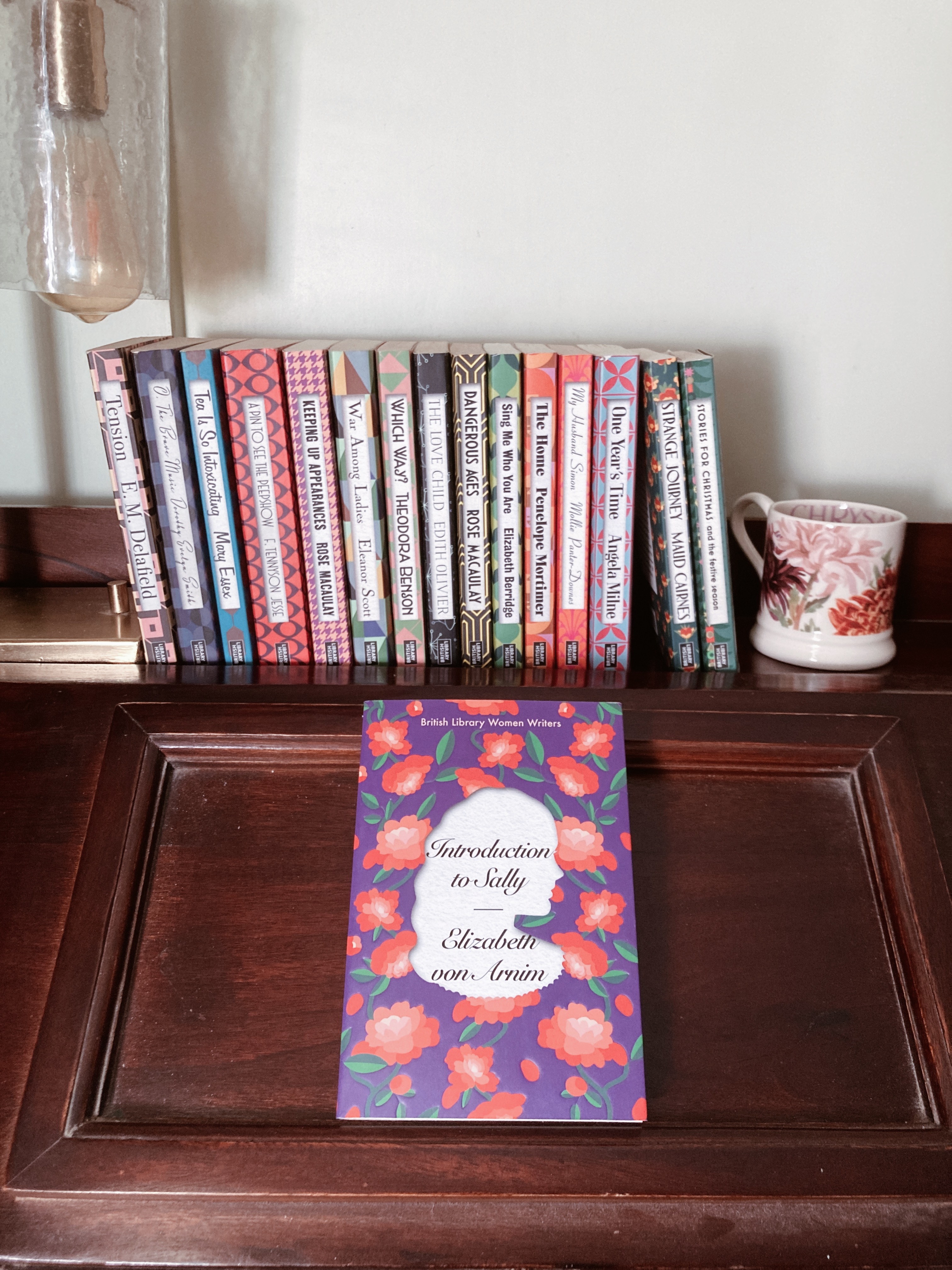
Introduction to Sally by Elizabeth von Arnim

Introduction to Sally by Elizabeth von Arnim

‘Introduction to Sally’ by Elizabeth von Arnim is a novel about a young woman of exceptional beauty, who causes a flurry of excitement wherever she goes due to her great beauty. Rather than act as a boon, Sally’s exceptional looks bring her the wrong type of attention and this is a matter of concern to the people related to her. First her Father, then her protective husband and then people who get to know her well are flustered by the amount of attention Sally unwittingly receives.

Sally has one great disability, at least in the eyes of the upper middle class and upper classes of society that she finds herself in and that is her inability to enunciate well, particularly her ‘h’s’ at the beginning of words, in fact she is encouraged to quickly lose the Cockney accent that she has used and known her entire life. 

This is an extremely funny novel and von Arnim’s knack for bringing out the ridiculous in social situations makes it a novel that will strike you at every twist and turn of plot, but at the same time – to me at least – it is a heartbreakingly painful novel. A novel where one has to look upon the plight of a naive innocent young girl who is worshipped superficially and is trained to behave in ways that completely delete her past. It highlights how much beauty is revered in society. There’s also a very uncomfortable line drawn between the social classes – there are the Pinners of the world spouting their Cockney accent and leading honest hardworking lives, the Dukes and Duchesses of the world with nothing much to do with their time except look towards the next form of personal amusement, and then the Lukes of the world – living in genteel poverty yet steeped in snobbery, studying at Cambridge and trying to win respect and admiration through their accomplishments. 

This is an interesting novel with Sally at the centre of it all. In fact an ‘Introduction to Sally’ will have you feeling, and experiencing many things in the short course of meeting her. The crux of the matter is : is there anyone in her life who can see past Sally’s good looks and love her for who she is?

Sally’s parents are hardworking people living in London and running a grocery shop. Mrs Pinner however, attracts a lot of attention due to her good looks and has to be protected by her husband from all and sundry. The couple have a much awaited daughter after many years and the Pinners decide to call her Salvatia – a baby who brings about salvation of their souls and spirits – but Mr Pinner is not to know then, the trouble Salvatia or Sally as she is called, will bring him. 

When Sally is a young girl, Mrs Pinner passes away and now it is Sally’s turn to command everyone’s attention due to her startling good looks. Mr Pinner retires to a quiet sleepy village in the vicinity of Cambridge and hopes that no one will discover Sally there. He doesn’t take into account however, the number of undergraduate students at Cambridge who pass through the sleepy village and call on his grocery store. 

One day, a young brilliant undergraduate called Luke Jocelyn chances upon Mr Pinner’s shop and is awestruck with the vision of Sally. He forgets all his academic ambitions, his bright future, his family, his purpose – all he knows is that he is beguiled with Sally and must have her for his own. When he proposes to marry his daughter, Mr Pinner’s initial anger regarding Jocelyn’s attentions, turns to joy and within the fortnight, Sally is married off to Luke Jocelyn. 

During the blissful first moments of the honeymoon in Cornwall, Luke’s initial state of besottedness succumbs to horror as he realises that much is to be desired regarding Sally’s delivery of speech. Dropping of h’s at the beginning of words, terms and phrases, in fact her Cockney dialect and all the little niggling details of her lack of education and total oblivion regarding social niceties – makes him realise that he has to introduce Sally to his Mother – a snobbish woman who is very proud of her son and his accomplishments and is very aware of her position in society. 

When Mother meets Sally for the first time she makes gentrifying Sally a full-time project and Sally, much to her dismay is temporarily abandoned by her husband who goes back to Cambridge. There’s nothing left for Sally to do but abandon ship, leading to disastrous, weird and wonderful consequences. The book is quite a joy-ride of action and activity but through it all one can’t help feel sorry for Sally, who wants nothing more than two rooms to live in, a number of babies to take care of and ‘usband’ to come home to her at the end of the day. 

Is it a satire against society? Perhaps it is. And one can only wonder about a society so chained to a love for superficial ideals, wealth and an awareness of class differences. We need more people who have Sally’s heart, her love for home, her innocence and the freshness of her voice. A thoroughly thought-provoking novel shedding light on the social sensibilities of the 1920’s.

’Introduction to Sally’ was sent to me as a review copy but as always, all thoughts about the novel are my own.

Introduction to Sally by Elizabeth von Arnim

Stories for Winter and Nights by the Fire

Stories for Winter and Nights by the Fire

There’s something very haunting about the collection of stories entitled ‘Stories for Winter and Nights by the Fire’. They’re certainly those kind of tales that will make you want to sit closer to the fire, nestle into a blanket and truly absorb the spirit of winter. I’ve now read the stories and each one of them has a wonderful mood that will have you pausing and thinking about the feeling of being immersed in winter. 

There’s an unusual story by Elizabeth Taylor of a young woman waiting for her lover in a house completely flooded by the icy waters of the overflowing Thames. She spends a night with two mystery neighbours, after wading out to their house in a boat, drinking and trying to overcome her sense of isolation. 

‘A Cup of Tea’ by Katherine Mansfield is set around a cold winter afternoon. The story is about a rich, well-to-do woman called Rosemary who, on a whim, takes home a poor young woman who asks her, on the street, for the price of a warming cup of tea. Her pity takes a turn though, when the young girl’s beauty catches the eye of her husband. 

‘The Snowstorm’ by Violet MacDonald is a peculiar story about a woman, Elizabeth and a man meeting at an inn and the man imploring her to spend the night with him. There is a description of the terrific snowstorm that they had to drive through to reach the country house in the depths of the country. There’s lots of atmosphere and even more snow and a feeling of foreboding in the story which keeps you on the edge of your seat. ‘November Fair’ by Kate Roberts is a small story that captures beautifully the hard life of the Welsh people with beautiful nuggets of quotidian detail. Here too the cosiness of the railway compartment contrasts sharply with the cold of the exterior Welsh landscape.

Apart from this there’s a spooky ghost story, a strange story from Elizabeth Bowen about searching for the perfect winter hat at a very quiet mysterious shop with a gracious and slightly condescending proprietress called Ann Lee. There’s a chance encounter with a sinister man whilst at the shop. There’s a story to make you smile called ‘The Cold’ from Sylvia Townsend Warner – which has that woeful wonder as its central character – the winter cold!

These are just a few of the stories that have caught my eye. I think this is the perfect book to pick up in January and February, when the excitement of Christmas is over and the winter nights draw in. Don’t expect Christmas cosy, but do expect lots of wintry atmosphere.

’Stories for Winter and Nights by the Fire’ was sent to me by the British Library as a review copy but as always all opinions are my own.

Top 10 Books of 2018

Happy New Year to everyone reading the blog. Thank you for all your kind comments and feedback during the past year.

2018 on the whole, was a year of comfort reading. It has been three years since we moved back to India after spending many years abroad. Slowly but surely, we are easing in to a pattern of life here. Perhaps I will be ready for darker, more complex books next year? 🙂

A major highlight of my reading year has been reading all 12 books in Miss Read’s ‘Thrush Green’ series. Though none of the books made their way into my Top 10, they provided much needed comfort and reflected a way of life that I would at least love to emulate (although not remotely possible under the circumstances).

I ended up reading a total of 45 books during the year. Although not a large number, I enjoyed my reading year at large and can’t wait to jump in to a fresh new year of enhanced reading.


Here, in Order of Reading Chronology, are My Top 10 Books of 2019:

The Return of the Soldier by Rebecca West

Return of the Soldier’ by Rebecca West is about a Great War veteran who has returned from the trenches suffering from shell-shock.

His amnesia prevents him from remembering his wife of ten years, with whom he has loved and lost a small child. His cousin Jenny, who lives with them, he can recollect, but only as a young woman, fifteen years younger.

To the dismay and disgust of his wife Kitty, the one person he can remember is his sweetheart from fifteen years ago- Margaret, with whom he has a very romantic history. She was then, a young, simple girl, a poor inn-keeper’s daughter, of little sophistication.

Christopher and Margaret meet again and rekindle their relationship at Christopher’s behest but Kitty is anxious for her husband to meet a doctor and be treated for his lapse of memory.

It is left to Margaret, with her superior understanding of Christopher’s mind (in-fact the perfect soul mate) to trigger an emotion that will bring about the return of the soldier in both the physical and emotional states. This is a story about love and sacrifice and is also an exploration of the relative strengths of different human relationships.


Can You Forgive Her by Anthony Trollope

Trollope’s entree novel in to his ‘Palliser series’ is a novel dealing heavily with political power and personal ambition.

Political ambition, certainly seems to be one of the main motivating factors behind male actions in this book.

However, the women in this novel show a great deal of indecision in the course of the novel.

Why is Alice- the lead female protagonist, such a dithering fool? Can we forgive Alice for her lack of decisiveness. And as Alice is not the only dithering lady in the book, are we more inclined to forgive the other ladies in question (Lady Glencora and Mrs Greenow)?

As with all Trollope novels, there is much food for thought about the cause and effect of human actions.


Young Anne by Dorothy Whipple

‘Young Anne’ is the eighth and final Dorothy Whipple novel to be published by Persephone Books but in the grand chronology of things, is Whipple’s first and most autobiographical novel.
It is set in the years leading up to the First World War and follows the life and growth of Anne Pritchard, youngest child of a middle-class, Lancastrian family. The ‘Young’ in ‘Young Anne’ not only refers to the tender age of the female protagonist, it also helps to emphasize the extreme naïveté of Anne Pritchard, the mistakes that youth often make and the consequences of immature decision making on adult life.


The Lark by Edith Nesbit

This is the first time that I’ve ever read any adult literature by Nesbit and I couldn’t be more in love with this little gem of a novel.
The writing is airy and light, full of childlike whimsy and delight and the plot is delightful.
Two young women, upon coming of age discover that their inheritance has been misspent. They have no relatives to call their own, they are alone in the world – all they have been left as an endowment is a small country cottage and a trunkful of vintage clothing in the attic. Rather than get upset with this unfortunate turn of events, the two young women try their hand at a number of money-making ventures. They treat the whole situation as a ‘Lark’ and their attitude is so positive and cheery that they win a lot of friends along the way.
It is also a remarkable example of female determination and independence, much in keeping with the decision to publish this novel as part of a series dedicated to celebrating Penguin Women Writers and the centenary of women getting the vote in 1918.


Guard Your Daughters by Diana Tutton

Guard Your Daughters deals with the unconventional upbringing of five daughters. Five daughters, who despite a lack of formal education, shine in different ways. This is the story of their unusual way of life, sequestered from mainstream society due to the neuroses of an over protective mother.
I must admit that ‘Guard Your Daughters’ was one of those books, where one paragraph in, I just knew that this was going to be one of my most favourite books.
One can’t but help draw a comparison between Dodie Smith’s voice in ‘I Capture the Castle’ and Diana Tutton’s in this particular novel. Highly recommend this coming of age novel that deals with important issues of mental health.


The Children Who Lived in a Barn by Eleanor Graham

This is the rather unlikely story of a small group of children, whose parents unexpectedly travel to Europe to attend to the needs of an ailing relative. The children are left unattended, without an adult to take care of them and when their parents don’t return or send word of their whereabouts – they are left in the strange
predicament of having to fend for themselves.
The landlord of the house where the family lived suddenly decides to evict them due to a sudden whim and the children have no recourse but to live in a nearby farmer’s barn.
The entire village is up in arms against the children and want them to separate and go to different homes. The children decide to fight all odds, stick together and eke out an existence in the barn.
Though the story is an unlikely one, the determination and initiative taken by the children is truly remarkable. I think it is a fascinating read for children and adults alike.
After all, how many of us as children have dreamt of being self sufficient and resourceful enough to have a small house/tree-house of our own- a private sanctuary where we act as independently and responsibly as grown ups?


The Diary of a Nobody by George Grossmith

This brilliant Victorian epistolary novel – ‘Diary of a Nobody’ comes highly recommended if in need of comic relief on topics related to the absurdities of daily life.
If you loved ‘Diary of a Provincial Lady’ you will certainly enjoy this novel.
The difference is that the tone of the provincial lady is self deprecating, whereas is this case Mr Pooter is bursting with self importance and a sad need of demanding respect from society.
The term ‘pooterish’ – is winsomely derived from the character of the lead protagonist in this book.


Fair Stood the Wind for France by HE Bates

Fair Stood the Wind for France’ by H E Bates is a war time work of fiction that deals with the story of a group of British airmen, who are compelled to make a forced landing in occupied France and have to take refuge in the home of a kind French family, who risk all they hold dear to help the men.
In particular it is the beautiful story of the love and trust that grows between the injured head flight pilot and the daughter of the French family.
Fair Stood the Wind for France was poignant, a World War Two story about love and trust and loss on an epic scale.


The Lark in the Morn by Elfrida Vipont

This lesser known but critically acclaimed children’s book author (winner of the Carnegie Medal in 1950) penned a series of books about the lives of a Quaker family living in England.
At times the mode of writing can seem a bit archaic but the beautiful plot of this, the first book, will have you grabbing the second book (Lark on the Wing) in no time at all.
A young, rather forlorn, motherless child realises her vocation in life – that of being a singer. Lark in the Morn charters her realisation of this process and Lark on the Wing – outlines her struggle to establish herself as a singer.
The storytelling in both books is very compelling. If you enjoy music and the arts, this is a particularly uplifting read.

Village Christmas by Miss Read

I spent the entire year reading all 12-13 books in Miss Read’s ‘Thrush Green’ series but ultimately it was Village Christmas, from the ‘Fairacre Series’ that stole my heart.
The book, in my opinion, can be read as a stand-alone.
It chronicles a day in the life of two elderly sisters, who are called upon quite suddenly, to help a needy neighbour on Christmas Day.
The story has all the wonderful light touches and beautiful details that make Miss Read’s books so endearing and comforting. I think I will be reading this book as part of an annual tradition.
Which was your favourite book of 2018? If I had to pick just one – I would say ‘Guard Your Daughters’.


Five Little Pigs by Agatha Christie

image.jpeg

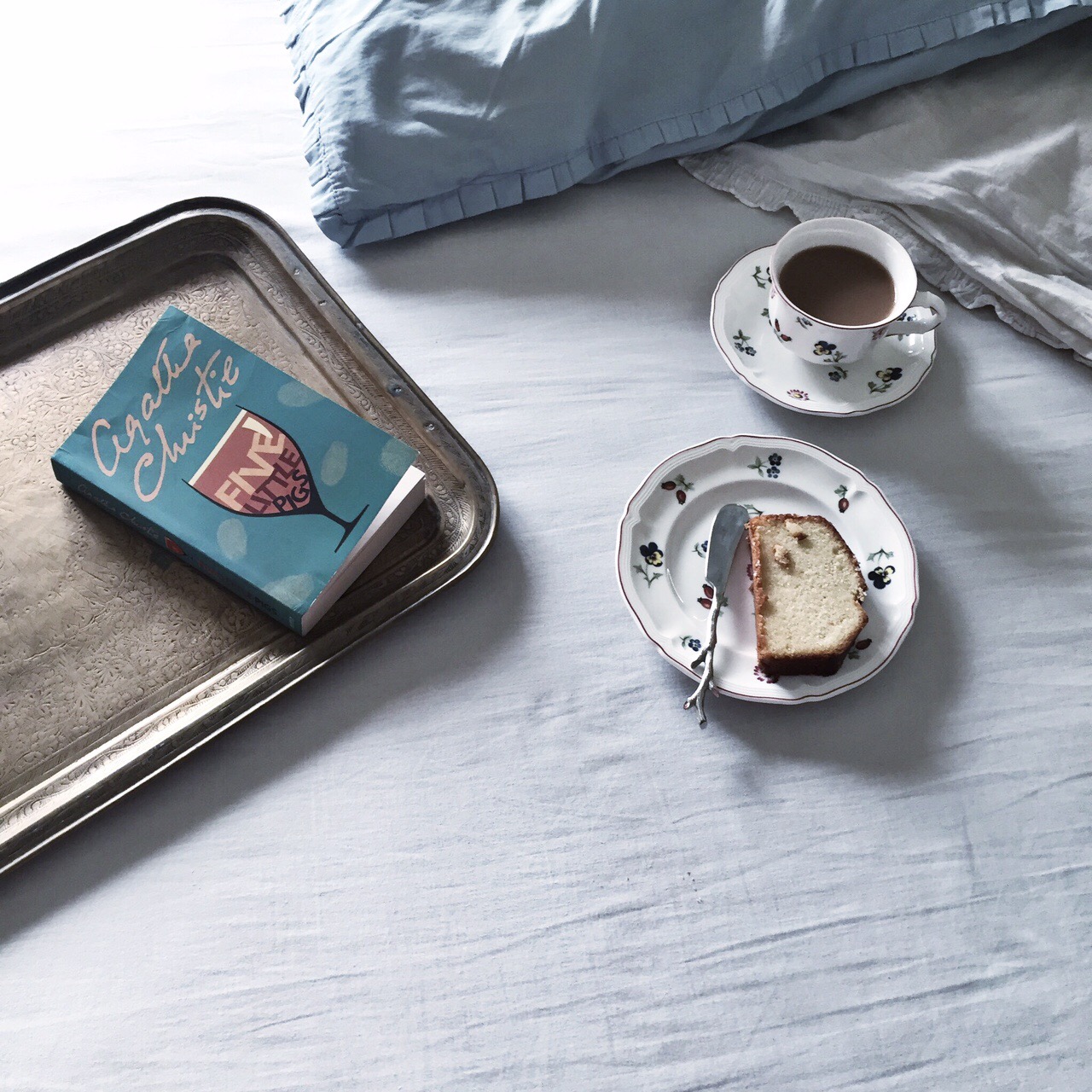
‘Five Little Pigs’ deals with the story of a woman who has been convicted and killed for the murder of her husband- the reputable bohemian artist Amyas Crale. Caroline Crale, his wife, is sentenced to death for poisoning her husband, by lacing his drink with the lethal poison coniine. While all the clues point towards Caroline Crale as having committed the crime, in a posthumous letter to her daughter, Caroline admits her innocence.

Caroline’s daughter comes into possession of her mother’s letter  after coming of age. Upon reading its contents she asks the famous detective Hercule Poirot, to investigate the facts of the case and thereby rescue her mother’s name from ignominy.

After Poirot learns of all the facts, he concludes that there are five likely suspects. He likens their personas to the five little pigs of the nursery rhyme.

There is the long time family friend Phillip Blake (a stick-broker- ‘this little pig went to market’), his brother, the reclusive Meredith Blake (amateur herbalist-‘this little pig stayed at home’), Elsa Greer, Amyas’s greedy lover (‘this little pig had roast beef’), impoverished governess Cecilia Williams (‘this little pig had none’) and lastly, the wronged and disfigured step-sister of Caroline Crale-Angela Warren (‘this little pig cried all the way home’).

Sixteen years have passed, but Poirot is determined to unveil the truth behind the murder.

There are a number of people with motives: Caroline Crale was jealous of her husband’s affair with Elsa Greer and is therefore, the prime suspect.

As with all Christie novels, this mystery has you guessing till the last moment. The story is told beautifully from multiple personal narratives and points of view.

‘Five Little Pigs’ has a very good plot and this one in particular is all about understanding the psychology and emotions of the players.

I did miss Hastings and Inspector Japp, however, and Poirot’s musings were shown to a lesser extent than in other novels. Despite that, ‘Five Little Pigs’ is one of those Christies that must be read if you are a fan of her work.

Title: Five Little Pigs

Author: Agatha Christie

First Published: 1942

Setting: Alderbury Estate, Devonshire, England

Main Characters: Hercule Poirot, Amyas Crale, Caroline Crale, Elsa Greer, Phillip and Meredith Blake, Cecilia Williams, Angela Warren