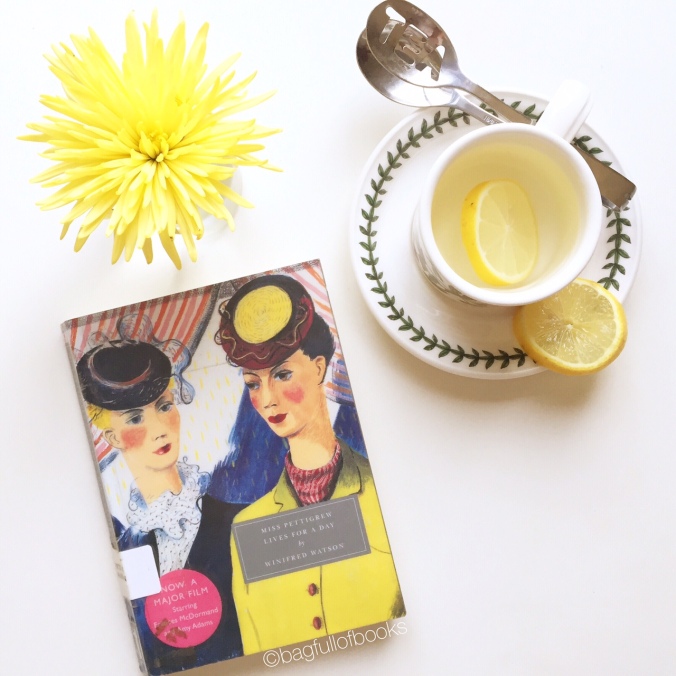
Summer Half by Angela Thirkell

IMG_6511

‘Summer Half’ by Angela Thirkell was my second foray into the Thirkell novels set in the fictional, rural English province of Barsetshire (derivatised from Anthony Trollope’s Barsetshire of the Barchester Chronicles series).

I feel that one must be prepared mentally before embarking upon a Thirkell novel. While she lacks the sharp wit of Barbara Pym, the superior plot of Stella Gibbons, the excellent writing of Nancy Mitford, there is a soft sleepy British humour in her novels that makes them irresistible to me. Therefore, I feel that one should not start reading the novel with a lofty sense of literary expectation.

The books have a weak plot but are filled with a cast of unmistakably middle-class British characters who belong to a bygone era. Some of them are perturbed with the state of political affairs in pre World War 2 Europe, but for the most part, they are engaged in playing tennis, reading literature and enjoying summer picnics.

There are a few characters who share the same names as Trollope’s Barsetshire characters. A favourite of mine-Old Bunce appears in the new avatar of a boatman in ‘Summer Half’- a fact that I derived particular pleasure from.

The characters in ‘Summer Half’ are people who have epicurean qualities and so the book is liberally scattered with references to meals that will make your mouth water.

The tea in Colin’s room looked perfectly delightful. There were mustard and cress sandwiches, cucumber sandwiches, jam sandwiches, bloater paste sandwiches, cakes with pink icing, chocolate cake. a coffee cake and two plates of biscuits. Colin,  poking about in the village, had found a grocer who kept these joys of his early childhood, animal biscuits and alphabet biscuits and had bought a pound of each. There was also a huge bowl of strawberries, a large jug of cream and on the dressing-table beer and sherry for the late comers.

There were two specific points about the plot that drew me to this novel. The first was the school setting of the book (I adore school stories!). The second was the fact that it was set in the summer- and I felt like a month of light summer reading this month, after finishing Bleak House in June.

The story deals with the decision made by young and brilliant Colin Keith, a recent graduate of Oxford and destined for a career in law, to sacrifice his calling in life to take up a teaching job at the local Southbridge School, during the summer term. What he sees as a sacrifice, trying to earn a living instead of studying for the law, his parents see as a temporary summer diversion. Colin packs his bags and takes up a room in Southbridge School and is immediately charged with the difficult task of teaching the classics to the boys of the Mixed Fifth.

We are introduced to a bevy of school characters: the Headmaster Mr Birkett, his beautiful but shallow daughter Rose who is perpetually engaged, this time to another schoolteacher Mr Phillips, Mr Everard Carter- another schoolteacher and three boys from the Mixed Fifth- Tony Morland, Eric Swan and scholarly but absent minded ‘Hacker’.

Not only do we gain admittance to the  goings-on at Southbridge School via Colin Keith, we also get to know of his middle-class, respected family: Mr Keith (lawyer), matriarch Mrs Keith (placid and ever welcoming of guests), elder brother and lawyer Robert Keith and his family. sweet-tempered sister Kate and younger schoolgirl sister Lydia-loudvoiced, opinionated and on more than one occasion described as an ‘Amazon’.

When a number of unmarried young men and women meet frequently during summer picnics, school Sport’s Days, house parties during long Bank Holidays, this is most certainly a recipe for romance and matchmaking.

Read if you will, about this perfect snapshot of bucolic provincial life. There will be plenty of talk of sunshine and tennis matches, of the midnight mishaps of errant schoolboys, of scrumptious food where ‘hasty lunches’ consist of ‘salmon mayonnaise, roast beef, potatoes, peas, French beans, salad, chocolate soufflé,charlotte russe, cream cheese, Bath Oliver biscuits and raspberries and cream. ‘Summer Half’, published in 1937 is that perfect escapist novel that I am sure every Britain would have wanted to get lost in, at a time when a nation was poised precariously on the brink of war.
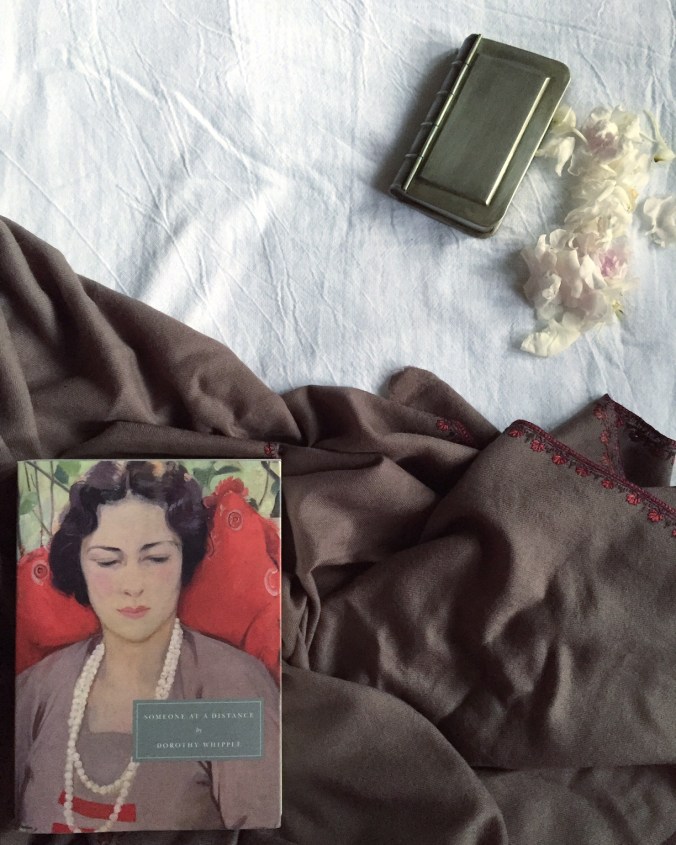
 

Someone At A Distance by Dorothy Whipple

IMG_6004

‘Someone At a Distance’ by Dorothy Whipple is the story of a young French girl called Louise Lanier. Born of hard-working, simple parents who have worked happily all their lives as small booksellers in the small French town of Amigny, they have never climbed high in the social ladder, much to the chagrin of their aspiring daughter. Based on this lack of pedigree, Louise is jilted by her secret, longtime sweetheart: the son of the town squire who decides to marry a woman from a reputed family instead. Broken-hearted, but refusing to show it, Louise escapes to England to serve as a companion to a wealthy, old lady called Mrs. North.

Mrs. North lives near to her son Avery, a prosperous publisher and his family, consisting of his wife Ellen, daughter Anne and son Hugh.

Avery North and his family have the perfect life. He is a devoted father. He is admired and respected in his publishing firm. He and his wife Ellen have a trusting, committed relationship. And then all of a sudden cool, calculated and beautiful Louise steps into their lives…

Louise needs to preoccupy her mind and at first is unsure of how to engage herself. Finding nothing better to do, she takes charge of old Mrs. North’s dressing, paying attention to every little detail of adornment. Mrs. North is charmed with the attention that the young French girl pays her and grows to care and depend on her.

Mrs. North gifts the French girl a diamond ring upon her return to France. But even Louise is surprised when Mrs. North leaves a considerable amount of money to Louise in her will.

Louise returns to England to claim the bequest for herself. Unwillingly, Avery and Ellen North let her into their perfect home but Louise shows no signs of leaving. She is jealous of the Norths’ happiness, of the love they share in their small family and she is determined to ruin it.

When Ellen discovers the affair that is going on in the very same house that she lives in, she is shell shocked. It seems impossible to her that her devoted, loving husband could forsake all that he holds dear, to be with a callous, cruel young woman.

In her moment of strife she looks towards religion but can find no comfort.

“All those books, all those prayers and she had got nothing from them. When everything went well for her she had been able to pray, she couldn’t now. There was such urgency in her present situation that until the pressure was removed she couldn’t think about God. She hadn’t the patience to pray. It was a shock to her. Surely God was for these times?”

Avery does not return to her. Ellen regards his desertion as a sign of his love for Louise but nothing could be further from the truth. He despises Louise and takes to drink to drown his sorrows and to forget that he has lost everything that he holds dear.

He marries Louise out of his need to cling to someone and Louise holds onto him for financial gain.

Ultimately it is a situation where no-one is happy. Is there retribution for Louise? Are Avery and Ellen able to reconcile their differences? I will leave you to find out.

The book is a story about adultery. It is a story about a husband’s weakness, a wife’s short-sightedness and a young, ambitious girl’s yearning to rise up from her provincial upbringing and to destroy the happiness of others. But the book is more than the sum total of these individual parts and the title reveals this.

The title ‘Someone At a Distance’ is a curious one. It is only towards the latter part of the novel that the significance of the title emerges and one realizes it has been used with much thought.

The title deals with the idea that a person’s negative actions and thoughts can have a far-reaching consequence on the lives of people far removed from them. It is like a ripple effect. A strong undercurrent of ill-will may wreak havoc on the hitherto peaceful lives of people on distant shores. Such is the inter-connectedness of the world and its people.

This is a beautiful book. I read it in one breath. It was virtually unputdownable. Whipple’s storytelling is superlative. The psychological tension she develops in taut situations can be felt acutely. When Ellen grieves in the aftermath of her husband’s desertion, which has been dealt to her out of no wrong-doing of her own, we grieve along with her. We feel and comprehend her every emotion. We sympathize with her and we yearn for her strength and salvation. On the opposite side of the spectrum we despise Louise’s every movement and intention. And we hope and pray for some kind of justice. Whipple manipulates our emotional well-being, during the reading of the novel to good effect and delivers yet another stellar story.


The Constant Nymph by Margaret Kennedy

image.jpeg

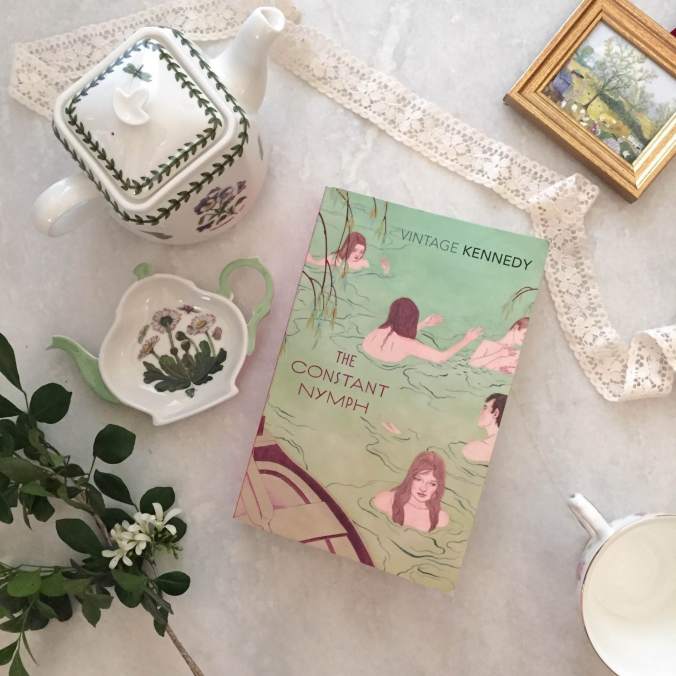
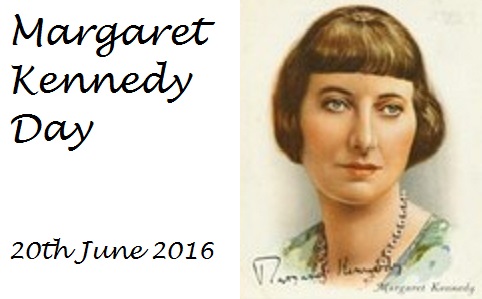
This review of Margaret  Kennedy’s ‘The Constant Nymph’ is in celebration of Margaret Kennedy Day, hosted by Jane from Beyond Eden Rock’s Blog.

The Constant Nymph is Kennedy’s most celebrated novel. Published after the First World War, in 1924, it was met with much critical acclaim. It is certainly a well written novel and the storyline is smooth without any stops and gaps. The subject matter is a little sensitive but quite intelligently written.

The story for the most part is set in Austria, in the Tyrolean Alps and I must say that the setting was one of my most favourite things about the book. It tells the story of the Sanger family. The father, the avant-grade composer Albert Sanger, is an unusual man. A gifted but not very successful English composer he has spent most of his life in exile, inhabiting various European towns and cities and simultaneously acquiring a large host of wives, mistresses and children.

Sanger, finally settles down in a remote chalet, high up in the Tyrolean Alps, in a location that can be accessed only by train, boat and a steep climb. Here, he lives with his slovenly mistress and seven children in a lively cohort frequently referred to as ‘Sanger’s circus’. Many of Sanger’s artistic friends, mostly bohemian in temperament, visit and stay with the family.

One of them is the talented composer Lewis Dodd, a young man who is a regular visitor and is so well loved by the family that he almost seems part of it. In particular Lewis and fourteen year old Teresa have a very close relationship. Teresa worships Lewis and Lewis is very tender and loving towards Teresa.

 She was guided by the constant simplicity of her young heart. He was himself the only man who could ever betray it and she had been his, had he known it, as long as she could remember. Her love was as natural and necessary to her as the breath she drew…

The family is considerably disturbed when Sanger quite suddenly dies. The orphaned children look towards their maternal relations for support and are sent to English boarding schools, much to their disgust. Prior to their dismissal, a maternal cousin, Florence visits them up on the alm. Beautiful, sophisticated and well educated, she beguiles Lewis and the two of them decide to marry after a quite short courtship. Teresa, heartbroken, watches as Lewis is swept off his feet.

In England, Florence and Lewis settle down to married life which Lewis quite quickly finds very stifling. He realizes the mistake that he has made and looks again to fifteen year old Teresa, for comfort. Constant in her love for him, Teresa must choose between the calling of her heart and her moral obligation towards her cousin.

One cannot but help draw mental comparisons between Nabokov’s ‘Lolita’ and Kennedy’s ‘The Constant Nymph’. I will not say more, but I do believe that Kennedy has dealt with a very sensitive topic with great skill.

I find the love triangle at the heart of the novel to be quite unique. The different people in the novel have quite unusual, unconventional relationship dynamics amongst themselves. Teresa’s love for Lewis can be likened to that of a teenage infatuation but what makes it unusual is that it remains quite strong and that it is equally reciprocated by Lewis.


Lewis and Florence have an unusual relationship as well. Lewis is mesmerized by Florence’s beauty and sophisticated demeanour and Florence is drawn to his passion and talent for music. Lewis holds great power over Florence and knows it all too well.

The story I think is quite modern. Nearly a century later, the bohemian lifestyle of the Sangers’ seems quite unconventional  to say the least.

There are frequent references to the importance of the need of formal education in a person’s life. Though Kennedy advocates it, she also shows us that it is not a requisite for forming a moral sense of right and wrong and steadfastness of character.

I find the title to be quite curious. When I look up the exact definition of nymph in the dictionary it refers to ‘a mythological spirit of nature imagined as a beautiful maiden inhabiting rivers, woods, or other locations’. As I ponder over the meaning I realize that the title is so very apt.

The beauty and spirit of this book lies in the Tyrolean chapters, where the children roamed free and uninhibited in the bosom of nature. Teresa, whilst described as being far from beautiful by Kennedy, is always described in the most loving terms by Lewis. Teresa’s constancy of heart can be witnessed at every step of the story, proving to us that this  blessed trait can be found in the very young too. It is a valuable lesson to be reminded of.

9d16-5853-c1eb-d0d5

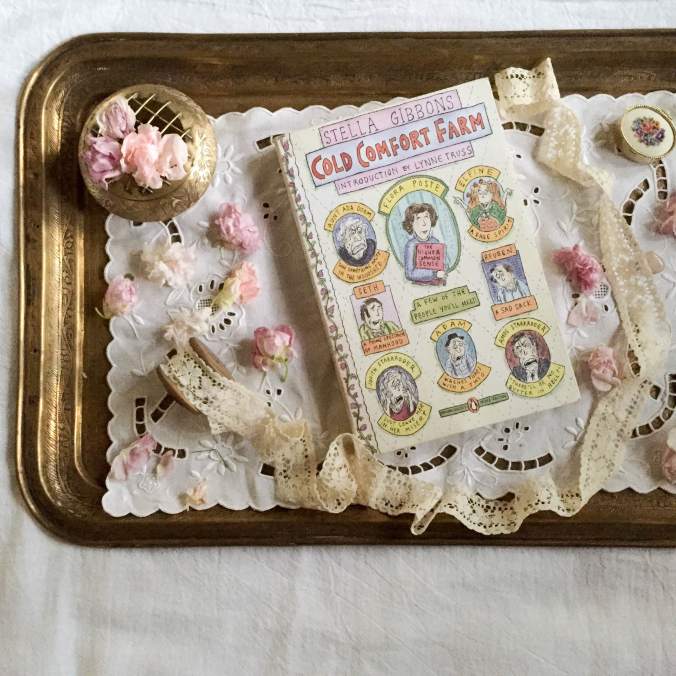
No Comfort at Cold Comfort Farm

a677-ea29-0a9b-d9e3

This was my second experience with reading Stella Gibbons, the first book being Nightingale Wood.

Nightingale Wood had enchanted me. It was such a romantic, Cinderella-like story and so intelligently written. I was naturally very eager to read more Gibbons and so all my bookish friends recommended ‘Cold Comfort Farm’ to me. I expected the same soft, dulcet toned storyline but I was quite surprised with the strangeness of Cold Comfort Farm.

It was cold, there was no comfort and it was extremely raw.

If I were to describe Cold Comfort Farm in a single word, suitable descriptions might be: parody, satire and melodrama.

The story centres around the adventures of city-bred, sophisticated Flora Poste. Born of affluent parents and blessed with a sound education, Flora finds herself orphaned in her twentieth year, when both her parents die during the annual epidemic of Spanish flu. Her parents leave her penniless except for a small annual income of one hundred pounds. Flora though highly educated is completely uneducated in the ways of the world and means to earn a living.

She is full of ideas though, which she propounds to her friend Mrs Smiling. One of them is to unburden herself onto one of her distant relatives. There are several options: a Scottish bachelor cousin of her Fathers, a maternal aunt who breeds dogs in Worthing, a female cousin of her Mothers who lives in Kensington, and a motley band of relatives who live on a decaying farm in the depths of rural Sussex.

The only positive invitation arrives from the depths of rural Sussex. Flora trying to put a positive outlook on the rather bleak prospect of ‘Cold Comfort Farm’ comments to her friend Mrs Smiling:

“Well, when I am fifty-three or so I would like to write a novel as good as Persuasion but with a modern setting, of course. For the next thirty years or so I shall be collecting material for it. If anyone asks me what I work at, I shall say, ‘Collecting material’. No one can object to that.”

“You have the most revolting Florence Nightingale complex,’ said Mrs. Smiling.

It is not that at all, and well you know it. On the whole, I dislike my fellow beings; I find them so difficult to understand. But I have a tidy mind and untidy lives irritate me. Also, they are uncivilized.”

Flora bundles up her Florence Nightingale complex and heads to the farm on a mission to resurrect the fortunes of the farm and the lives of her rustic relatives. She feels excited to embark on this unknown rural adventure.

“On the whole, Cold Comfort was not without its promise of mystery and excitement.”

On arrival at the farm, she finds that the Starkadders are a strange cast of characters, each more unusual than the last.

There is the aged matriarch of the family: Aunt Ada Doom. She could not have been more aptly named. Continually haunted by memories of a traumatic event from her childhood she is wont to say, in times of trauma,

“I saw something nasty in the woodshed.”

We are not privy to the nature of the nastiness in the woodshed but Aunt Ada certainly knows how to use this proclamation to her own benefit. Whenever, any of the Starkadders threaten to leave Cold Comfort she goes into a frenzy of hysteria and recalls past memories of the woodshed.

Another character is Ada’s daughter Judith Starkadder, married to Amos. Judith, perpetually depressed, just wants to be left to wallow in her own misery. Her son Seth, a prime example of manhood is the apple of her eye and her daughter Elfine, a free wandering spirit seems to have slipped out of a scene from  Wuthering Heights.

There is sad Reuben, Adam the helping hand on the farm who washes the dishes with a twig and last but not least a bevy of unfortunate cattle, aptly named Feckless, Graceless, Aimless, Pointless and Big  Business. All these characters, suffused with the heady aroma of the profusely growing sukebind, a sign of fertility and growth, make for the dramatic cast of characters that render Cold Comfort Farm so memorable.

Of course there are extraneous characters: like the author Mr Mybug who add even more variety to the story:

“The trouble about Mr Mybug was that ordinary subjects, which are not usually associated with sex even by our best minds, did suggest sex to Mr Mybug, and he pointed them out and made comparisons and asked Flora what she thought about it all.”

The story is based on how and if Flora can change the course of the lives of each of the members of the Starkadder clan.

Fraught with extreme melodrama, comedic moments, strange situations and very memorable one-liners it is a very unusual book. Not at all what I was expecting. Very, very strange but so very memorable.

Souls Belated by Edith Wharton

IMG_3774

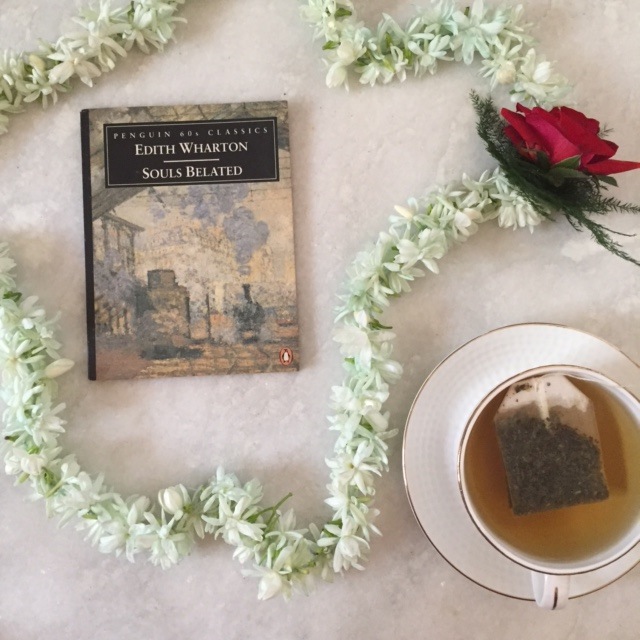
Souls Belated is a short story written by Edith Wharton. It tells of the relationship dynamics between Lydia Tilottson, the wife of a rich New Yorker and Ralph Gannett, a young writer and the man she has left her husband for.

The pair embark on a far-flung sojourn that takes them to the more remote and obscure regions of continental Europe: from Sicily, Dalmatia, Transylvania to Southern Italy. They pass from one country to another, posing as a married couple, shrouding themselves in a web of deceit and false pretenses. They move from one place to another hoping to find a place where they might set down roots and where Gannett might feel inspired to write again.

One day, however, an official letter arrives for Lydia in the post- her divorce papers and matters must come to a head.

The day that the papers arrive the couple are travelling to the Italian Lakes by train. From there, the plan is to secure a secluded spot in the mountains for Gannett to write and for them to be isolated from society.

As the railway compartment gradually empties just beyond Milan, Gannett broaches the subject of marriage to Lydia.

She answers in the most unexpected way, telling him that it is not her wish to marry him, leading him to doubt her regard for him.

Lydia responds: Don’t you see it’s because I care-because I care so much? Oh, Ralph! Can’t you see how it would humiliate me? Try to feel it as a woman would! Don’t you see the misery of being made your wife in this way? If I’d known you as a girl-that would have been a real marriage! But now-this vulgar fraud upon society -and upon a society we despised and laughed at-this sneaking back into a position that we’ve voluntarily forfeited:don’t you see what a cheap compromise it is? We neither believe in the abstract ‘sacredness’ of marriage; we both know that no ceremony is needed to consecrate our love for each other; what object can we have in marrying, except the secret fear of each that the other may escape, or the secret longing to work our way back gradually-oh,very gradually-into the esteem of the people whose conventional morality we have always ridiculed and hated?”

The train brings them at nightfall to an Anglo-American hotel on the brink of an Italian lake. What starts out as a plan to stay a night turns into a more permanent stay. Both of them feel the need to be in a crowded place, so that they may be distracted from their predicament and from each other.

Lydia and Gannett converge into the company of the society that they have scorned for so long- the genteel society of the rich and privileged who stay at the hotel. It is only when the farce of Lydia and Gannett’s false marriage is on the point of being exposed to their companions at the hotel that Lydia must make the decision of whether it is better to stay and marry Gannett, or leave and live an isolated life of her own.

This short story of Wharton’s addresses a number of important issues. The sanctity of marriage, the pressure of society to enter the institution of marriage, the issues of freedom and choice. It is quite a sad tale, very beautifully told, of two souls, very much in love with one another, who have met each other belatedly, at a point in life where marriage is more of a necessity than a joyful choice.

January, 2016 Wrap Up

IMG_1200

Here is a round up of book related favourites for the month of January, 2016. For a glimpse into December, 2015’s Bookish Favourites please see here.

1. Books

 I read a total of seven books in January. I read mostly from the modern classics genre and successfully ticked off two titles from my list of 12 New Authors I Would Like to Read in 2016 (that made me feel very good!). I enjoyed all these books so much, especially The Diary of A Provincial Lady and A Month in the Country.

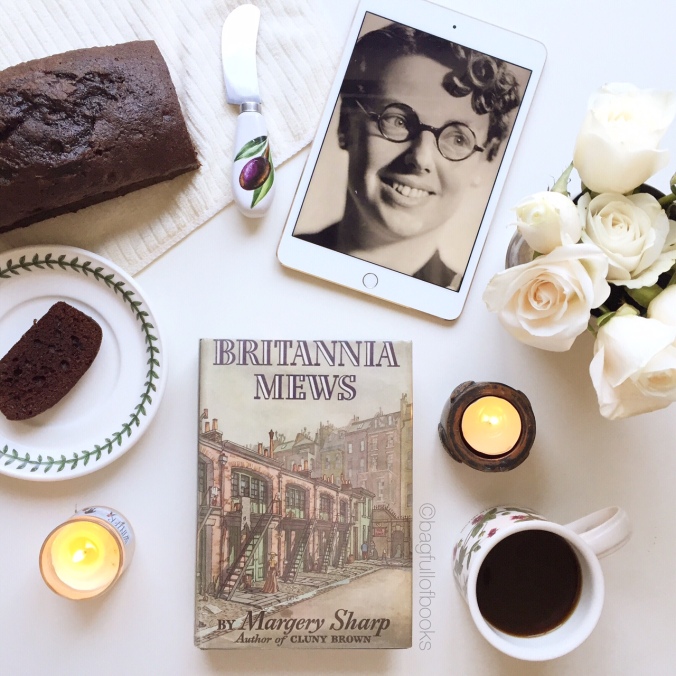
1) Britannia Mews by Margery Sharp

I realised I posted about this book in December but didn’t manage to finish it till January. I reviewed this book as part of Margery Sharp Day hosted by Jane from the lovely blog Beyond Eden Rock.

Britannia Mews is a book that describes the life and times of the central character of Adelaide Culver, a child of privileged circumstances, living in one of the row of houses along London’s Albion Place. Adjacent to Albion Place, stands Britannia Mews, once a stable, housing the horses used by the genteel folk living in Albion Place but now reduced to a slum at the turn of the nineteenth century.

Set in the late nineteenth century, Victorian London is portrayed at the intersection of where the rich meet the poor.  Adelaide Culver, marries her struggling art tutor and thereby goes to live in the slums of Britannia Mews. This is the story of what happens to a girl who has bravely broken away from the family shelter into a life of domestic strife and hardship. I enjoyed Margery Sharp’s excellent writing, descriptive and laced with subtle wit and wisdom. For a full review please see here.

IMG_0829

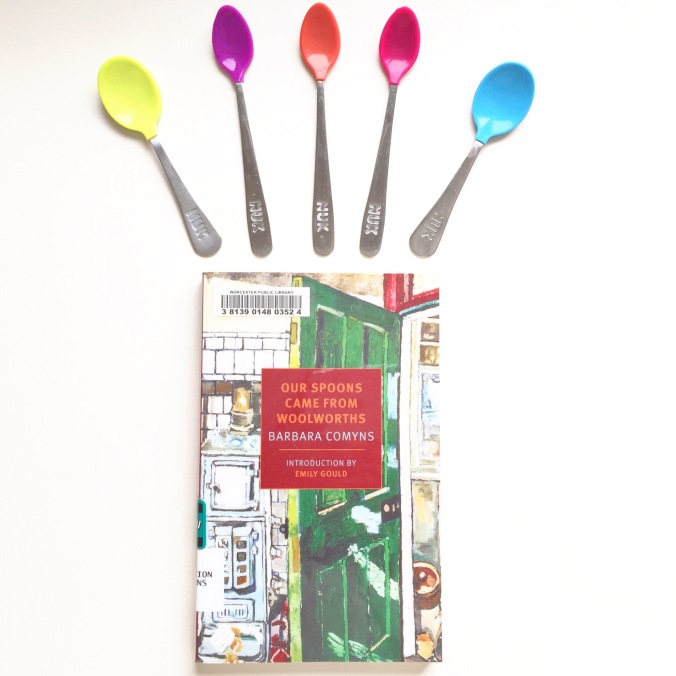
2) Our Spoons Came From Woolworths by Barbara Comyns

Our Spoons Came from Woolworths is the story of twenty-one year old Sophia, during the time when she was married to Charles Fairclough. The story is in its entirety, a first person narrative and tells of the harrowing poverty, the ups and downs of the young couple, in a time during which Charles refuses to take any financial responsibility for his household, using his need to practice his art as an excuse to shirk his duties. This was an exceptional book! For a full review please see here.

IMG_0153

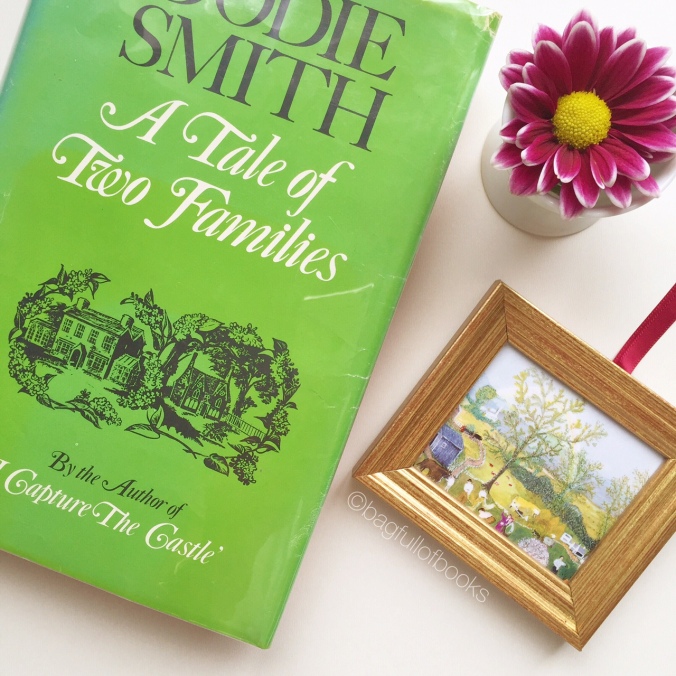
3) A Tale of Two Families by Dodie Smith

A Tale of Two Families by Dodie Smith is the story of the relationship between two families: those of May and June, two sisters, who marry two brothers, George and Robert. When May and George decide to relocate to the countryside for a few years, on a landed estate with a small cottage, it seems the most natural thing for June and Robert to leave their father’s house and set up home in the cottage on May and George’s leased estate. Robert, a skilled but lesser known writer plans on writing his magnum opus in the idyllic surrounds of the cottage. June is happy to be carefree and close to her sister. Robert and George’s father, Baggy, comes to stay with George’s family. May and June’s delightful mother, Fran, decides to stay with her two daughters for a while. The children in the family come upto the property on weekends, from London or the boarding schools they go to and a good time is had by all in the family. Then the close proximity leads to unforeseen events…

For a full review please see here.

IMG_0426

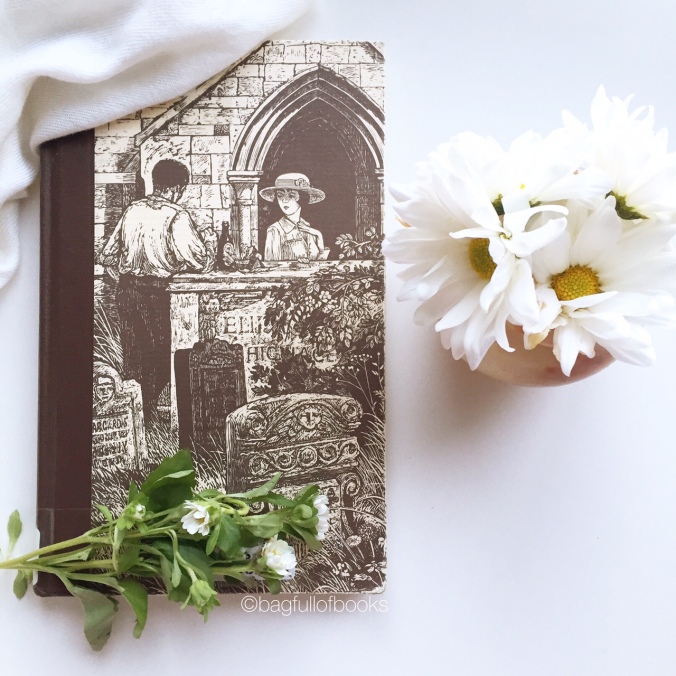
4) A Month in the Country by JL Carr

A Month in the Country by JL Carr is the story of war veteran Tom Birkin and the unforgettable summer he spends in the country, uncovering and restoring a medieval wall mural inside an old country church. It is a journey of discovery for Tom Birkin, both in regards to his work and rediscovery of self after the trauma and ravages of his war experiences. This was a charming, poignant novel. I felt that the narrative was a little uneven, which made it a bit of a slower read, but on the whole the story was so wonderful and evocative that I can’t help but look back upon it, with starlight in my eyes.

IMG_0611

5) The Diary of a Provincial Lady by EM Delafield

This was my favourite book this month and it really made laugh. The diary entries are so self deprecatory and certain incidents so cringe-worthy, they make great reading.

6) Mystery at Saint-Hilaire by Priscilla Hagon (Mabel Esther Allan)

I don’t remember how I came upon this book or the author but I was lucky enough to find a copy at my library. I’m glad I did. It read exactly like a grown-up Enid Blyton book so if you are a Blyton fan, this is a book for you.

7) Miss Pettigrew Lives for a Day by Winifred Watson

This was another favourite book this month. Quite funny, with several quotable, witty, one liners, this tells of a day in the life of staid, middle aged Miss Pettigrew. It is a day of astonishing unexpected events that transform Miss Pettigrew’s mind and outlook on life for ever.

IMG_0831


2. Movies and Audiobooks

The only movie I watched this month was the BBC adaptation of Tess of the D’Urbervilles (screenplay by David Nicholls) and it was soooo good! It really made me want to pick up the book and read it. I listened to the BBC full cast adaptation of Agatha Christie’s The Sittaford Mystery. I do enjoy these full cast dramatizations: it almost feels like going to the theatre.

3. Miscellany

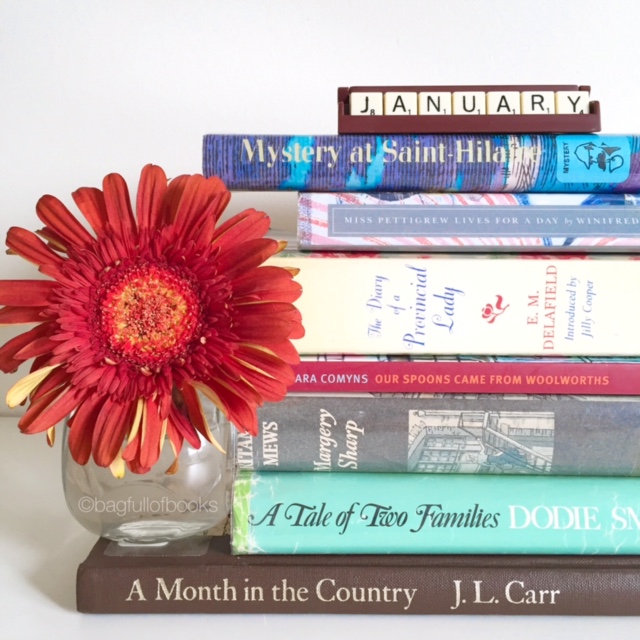
I bought so many books this month. Most of them were bought with Christmas money or were gifts to myself to revive my dwindling library. I hope to enjoy and read them over the next couple of years. Here is a picture of the books!

I hope you all had a great month of reading. I have several library books to get through in February which I am excited to share. Do have a great month!

Britannia Mews by Margery Sharp

IMG_0829

This review is written in celebration of Margery Sharp’s birthday on January 25th, 2016. I would like to thank Jane from Beyond Eden Rock for encouraging us to celebrate the life and works of a wonderful author, most of whose works remain difficult to find.

‘Britannia Mews’ is a book that describes the life and times of the central character of Adelaide Culver, a child of privileged circumstances, living in one of the row of houses along London’s Albion Place. Adjacent to Albion Place, stands Britannia Mews, once a stable, housing the horses used by the genteel folk living in Albion Place but now reduced to a slum at the turn of the nineteenth century.

Adelaide falls in love with her art teacher and aspiring artist, Henry Lambert and throwing all caution to the winds, elopes with him, to live a life of severely reduced circumstances and drudgery in a small house in Britannia Mews. In the beginning, Adelaide is happy with her new found independence, the novelty of keeping her tiny house spick and span and the belief that Henry will make a name for himself in art circles.  Slowly, however, she is resigned to the fact that Henry is a drunk, with no ambition in life and has married her for no reason other than a desire to get by on Adelaide’s annual income.

When Henry Lambert falls to his death from the steps of his Mews house due to accidental circumstances, Adelaide believes she has been released from the prison that she has created for herself in Britannia Mews. She longs to go back to her parental house in the countryside. However, a devious neighbor has witnessed the slight push that Adelaide gave her husband that accidentally led to his death. This results in blackmail: the neighbour forces Adelaide to pay her ten shillings a week and compels her to stay on in the Mews.

Then as time passes on and Adelaide’s life seems very bleak she discovers real love in the most unexpected way. The strength of this attachment (with a man named Gilbert) gives her the strength to forsake everything and everyone else in her life. Adelaide and Gilbert create a Puppet Theatre in the Mew’s stables and this eventually leads to the upliftment of Britannia Mews and several of its residents. The birth of the famous Puppet Theatre leads to the gentrification of Britannia Mews. Adelaide’s success leads to great empowerment; Adelaide is envisioned as a strong inspiring woman by subsequent generations. The Theatre brings employment to several individuals and much needed entertainment to innumerable people, especially during the dark, dreary times of the Second World War. The story is brought full circle when Adelaide inspires her niece to forsake her life of comfort and luxury in rural suburbia and live a life of artistic endeavor and adventure in running the Puppet Theatre in Britannia Mews.

Set in the late nineteenth century and leading into the years spanning the Second World War, Britannia Mews is a story spanning several generations and several important world events.

The attitudes and affectations of Victorian London are very much at variance with those of subsequent times and these are highlighted in the different characters of the story.

The book focuses on the intersection of where the rich meet the poor, the difference in living conditions of the two factions, the snobbery of the upper class, the raucousness of the underbelly of London society and the dissolution of these classes with the onset of the Second World War.

Women are portrayed in strong, influential roles. They marry to please themselves, not to gratify society. Convention is severely flouted in the book ‘Britannia Mews’.

It is an astonishing novel on many levels and depicts a slice of English history that is multifaceted and rich in detail. I’ve enjoyed reading a Margery Sharp novel that is a little different from the other books I have read, but quite, quite lovely!

Martha, Eric and George by Margery Sharp

IMG_0194

This review is written in celebration of Margery Sharp’s birthday on January 25th, 2016. I would like to thank Jane from Beyond Eden Rock for encouraging us to celebrate the life and works of a wonderful author, most of whose works remain difficult to find.

‘Martha, Eric and George’ is the third book in the Martha trilogy written by Margery Sharp. For reviews of the first two book in the series, please see here and here.

If ‘The Eye of Love’ was a lively entree into this delightful trilogy, ‘Martha in Paris’ was a deliciously light and entertaining prelude to the substantial finale of the drama- ‘Martha, Eric and George’, surrounding the central character of Martha.

The child Martha, her stolid personality, her large appetite, her obsession with drawing and sketching, even in the most trying circumstances amuses us in the book ‘The Eye of Love’.

In ‘Martha in Paris’ Martha due to her benefactor, Mr Joyce’s encouragement, accepts an opportunity to study art under a master-class artist in Paris. In Paris, she meets Eric, an English bank employee, and the two embark on a relationship of sorts, brought about under the most peculiar circumstances!

Martha’s plans to seriously continue her artistic studies are seriously thwarted, however, when she discovers that she is carrying Eric’s child. ‘Martha in Paris’, memorably concludes when Martha deposits her newborn son (unknown to Eric) on the doorstep of Eric’s Parisian apartment.

‘Martha, Eric and George’ starts when the baby is discovered by Madame Leclerc, the concierge of the apartment buildings that Eric and his mother reside in. In all her thirty years of being concierge at the building, this incident, perhaps, tops it all.

…she hadn’t meant to be defrauded of the most exciting incident in all her thirty years as concierge. There had once been a suicide on the Fifth, a burglary on the Third; in each case Madame Leclerc gave evidence, for so respectable a house it wasn’t bad, but neither episode could touch, for drama and human interest, the act of placing within the arms of a serious young man his illegitimate offspring.

Eric is astonished to discover that he is a father.

His single pertinent thought was still classic. “Oh God,” thought Eric Taylor,”why did this happen to me?”

Bewildered, Eric unburdens his offspring into his Mother’s arms, who is delighted to find that she is a grandmother.

Meanwhile, Martha escapes to England and starts practicing her art in earnest. In the next ten years she develops a reputation as a formidable artist. She does not think of her son during this time. Eric, is unable to track down Martha due to lack of a forwarding address. When an opportunity to exhibit her work in Paris arises, ten years later, she is  reminded that somewhere in Paris, she has a son.

There is a remarkable section in the book that describes the meeting of Martha, Eric and George in a Parisian coffee shop. One can only imagine the repercussions of such a meeting. One would imagine a mother to be visibly moved upon meeting her son, perhaps her heart might be softened upon seeing her offspring… one can never be sure, especially with Margery Sharp’s excellent storytelling.

Without giving too much away, I will leave it to you to find out what happens next…

Eric, Martha and George deals with several feminist issues: those of a woman or mother’s expected role in society. Indeed, it challenges those societal norms. We are encouraged to think sometimes, why should a man too, not be expected to play a nurturing role, outside that of merely supplying monetary sustenance to a child?

This is a clever book. One which kept me and keeps me thinking about it.

A Tale of Two Families by Dodie Smith


IMG_0426

  • Title: A Tale of Two Families
  • Author: Dodie Smith
  • Published: 1970
  • Location of the story: rural England

‘A Tale of Two Families’ by Dodie Smith is the story of the relationship between two families: those of May and June, two sisters, who marry two brothers, George and Robert. When May and George decide to relocate to the countryside for a few years, on a landed estate with a small cottage, it seems the most natural thing for June and Robert to leave their father’s house and set up home in the cottage on May and George’s leased estate. Robert, a skilled but lesser known writer plans on writing his magnum opus in the idyllic surrounds of the cottage. June is happy to be carefree and close to her sister. Robert and George’s father, Baggy, comes to stay with George’s family. May and June’s delightful mother, Fran, decides to stay with her two daughters for a while. The children in the family come upto the property on weekends, from London or the boarding schools they go to and a good time is had by all in the family. Then the close proximity leads to unforeseen events…

The reason for the move is in one way precipitated by May’s need to distance herself from George’s philandering ways in London. George, is a successful businessman in London. He commutes to his workplace by the train. The two sets of adults in the family along with Baggy, settle into a routine. George leaves early in the morning. May, ever the dutiful wife, gives him an early breakfast and he pops off to work on the train. May is busy with various household activities during the day. Robert, potters about the garden and keeps planning his novel in his attic study in the cottage. June is blissfully happy to be in the countryside, so near her sister and George. Quite disturbingly, we learn of June’s secret infatuation for George, a fact that she conceals quite well. George, returns home from work every evening laden with gifts for household members. The couples frequently dine together or George visits the cottage to watch television together in the evenings.

Baggy, the boys’ father feels a little isolated in his small wing of the house. Despite the fine food and company, he misses his home in London, which he had shared with Robert and June. Though May, spoils everyone with her beautifully cooked meals, she lacks the warmth that June had. Baggy also misses his old routine, nightly soaks in his bathtub with his granddaughter’s bath toys! This loneliness is somewhat abated when Fran, the girl’s mother comes to visit. Though Fran Graham is in her seventies she retains her youthfulness, both in spirit and in appearance. When she arrives at the country house by  a taxi, she is mistaken for a young girl by her grandchildren and Baggy.

‘Hello, here’s a taxi. Some girl appears to be arriving.’

Dickon, joining him said, ‘That’s no girl. That’s my grandmother.’

‘Fran does have a girlish figure,’said Prue, then raced after Dickon who was already on his way to the front door.

The family group is complete and a period of great contentment sets in. The lilac bushes on the estate are in full bloom. Nightingales can be heard in the dead of the night.

‘Heavens, how lucky we are,’ said June. ‘Lilac and a nightingale! And there’s a marvelous laburnum coming out near the cottage- and a may tree.’

‘”The lilac, the laburnum and the may”,’ said Robert.’I’m sure that’s a quotation…

They were back at the cottage now. Robert’s torch shone on a drift of cow parsley, left on the edge of the lawn.

‘”Where the cow parsley skirts the hawthorn hedge”,’said Fran.’And I do know who wrote that: Rossetti, the most loved poet of my girlhood.’

This idyllic period is disrupted when Fran’s sister, Aunt Mildred, or ‘Mildew’ as she is jokingly referred to, comes to stay. Aunt Mildred, creates a toxic environment within the household, owing to her childish ways and her overactive imagination which leads to events that have irrevocable consequences.

‘A Tale of Two Families’ arrested my attention till the last page. It had sublime, romantic moments filled with poetry and nature but it didn’t relapse into a completely cozy novel due to the great sexual tension, Dodie Smith developed in the novel.

It is a book I enjoyed reading and will, no doubt, re-read in the future. It is, to echo Dickens, a story about two families, in the best of times and worst of times.

Two poetry references in the book prompted the #poetrymatchart tag on Instagram. The first reference is to a poem by Charles Mackay, the second a poem by Dante Gabriel Rossetti.

I am inserting the posts below.


Our Spoons Came From Woolworths by Barbara Comyns

IMG_0153

‘Our Spoons Came from Woolworths’ is the story of twenty-one year old Sophia, during the time when she was married to Charles Fairclough. The story is in its entirety, a first person narrative and tells of the harrowing poverty, the ups and downs of the young couple, in a time during which Charles refuses to take any financial responsibility for his household, using his need to practice his art as an excuse to shirk his duties.

The story commences when Sophia and Charles, two art students, meet on a train, are immediately drawn to one another and decide to marry even in the face of severe opposition from Charles’s family, who believe that domestic responsibilities and marriage will hamper Charles’s artistic progress. Charles’s mother Eva, practically falls upon Sophia and accuses her of trapping her son.

Eva said I was not capable of love, only lust, and it was all a trap to catch Charles.

They are married in less than ideal conditions, in a church ceremony, presided over by an impatient priest, a handful of less then enthusiastic friends and relatives and the bride wearing an ugly green wrap-over skirt that had a tendency to unwrap at the most inopportune moments.

They arrange to live in a small flat on Haverstock Hill in London. With the ten pounds that a spiritualist friend gives them for a wedding gift they buy  furniture and household essentials.

We had a proper tea-set from Waring and Gillow, and a lot of blue plates from Woolworths; our cooking things came from there, too. I had hoped they would give us a set of real silver teaspoons when we bought the wedding-ring but the jeweler we went to wouldn’t so our spoons came from Woolworths, too.

Sophia earns two pounds a week with which she pays the rent, food and other household expenses. Charles stays at home painting. He sometimes tries to get work at commercial studios but nothing turns up in the face of the Great Depression. He is not troubled by the fact that he does not in any way contribute to the family. Sophia states:

Charles was quite happy just painting away, and as long as I earned two pounds a week and there were a few cheques in the drawer he hadn’t a care in the world.

This happiness is broken when Sophia quite unexpectedly discovers that she is expecting a child. At first she thinks her sickness is a result of eating too many strawberries but a visit to the doctors dispels that idea.

There is a quite memorable passage describing Sophia’s vague ideas regarding birth control:

I had a kind of idea if you controlled your mind and said ‘I won’t have any babies’ very hard, they most likely wouldn’t come. I thought that was what was meant by birth-control, but by this time I knew that idea was quite wrong.

Sophia although eager to be a mother is weighed down with the knowledge that Charles is terribly against being a father because he does believes they will not fit in with the kind of life he want to lead.

As time goes on, the stash of wedding cheques kept in a drawer whittle down and the couple find themselves living from hand to mouth, always guessing where the next few pounds will come from, to pay of their substantial debts. The descriptions of the poverty that Comyns describes are at times quite harrowing. They are told in quite a light manner though so that the reader does not feel excessively weighed down.

Sophia’s loss of job before having the baby signals the downward spiral that the couple find it hard to recover from.

I found the book to be quite compelling reading. The descriptions of Sophia’s child delivery in the hospital were at times quite funny but also shocking. The book quite brilliantly reflects the period that it describes, the hard circumstances of the Depression and the plight of women.

The book is very much a story about women, for women. Even in the depths of helplessness and despair for Sophia we are witness to her great strength and determination.

‘Our Spoons came from Woolworths’ is an exceptional domestic drama and Comyns displays consummate skill as a voluble spokesperson for the downtrodden women of that age.