The Darling Buds of May of HE Bates

image.jpeg

Title: The Darling Buds of May

Author: HE Bates

Published: 1958

Location of the Story: Rural Essex, England.

Main Characters: Pop Larkin (farmer, junk dealer), Ma Larkin, their children- Mariette, Montgomery, Primrose, Zinnia, Petunia and Victoria; Cedric Charlton or ‘Charlie’ – an officer from the Inspector of Taxes.

Short synopsis of the Story: Cedric Charlton, an official from the tax payer’s office comes to the Larkin residence to question Pop Larkin on the matter of his unpaid taxes. He doesn’t get very far because the Larkins ply him with good food, drink and heartfelt hospitality and quite soon he forgets the real purpose of his visit. This is aided by the fact that he falls under the spell of the Larkin’s eldest daughter- beautiful Mariette. This is the story of a dreamy summer in the life of the Larkin’s and a glimpse into their beguiling and unconventional way of life

I was first introduced to the book The Darling Buds of May by HE Bates by an English teacher at the tender age of twelve. It seems an unusual book to assign as school curriculum to young impressionable minds. On hindsight, I consider the choice a stroke of genius. I have never read anybody like HE Bates. He has a marvelous ability to capture the art of living a full and plentiful life. He has a genius for capturing a rural scene with a few swift brushstrokes and describing the epicurean delights of food and love quite like him. Here are a few excerpts from the book.

Outside, somewhere in the yard, a dog barked and the drove of turkeys seemed to respond in bubbling chorus. Far beyond them, in broken, throaty tones, a cuckoo called, almost in its June voice, and when it was silent the entire afternoon simmered in a single marvelous moment of quietness, breathlessly.

There is a description of a typical Sunday lunch enjoyed in the garden that one should not read on an empty stomach…

Half an hour later two of the three geese were laying side by side, browned to perfection, deliciously varnished with running gravy, in a big oval blue meat dish on the table under the walnut tree. Other blue dishes stood about the table containing green peas and new potatoes veined with dark sprigs of mint, baked onions, asparagus, roast potatoes, Yorkshire pudding, and broad beans in parsley sauce. There were also big blue boats of applesauce and gravy… It was time for ice cream. Mariette rose to fetch it from the kitchen, together with a jug of real Jersey…

Bates has a wonderful raucous  sense of humor. When the Brigadier, a luncheon guest of the Larkin’s is offered a cup of tea after this hearty repast he heartily declines and thinks to himself…

The thought of tea after two plates of goose, asparagus sage and onions, ice cream, and everything else provoked in the brigadier’s stomach a restless thunderstorm. He suppressed a belch of his own, Pop was not so successful and a positive bark leapt out, causing Primrose to say. ” I love sage and onions, You keep having a taste of it all afternoon. And sometimes all night too.”

The book is low on plot. Nothing really seems to happen and if it does, it seems to occur in a somnambulant food-coma induced slow-motion. But the anecdotes are so humorous, the descriptions are so lovely that I at least, don’t mind. I want to be taken to the land of the Larkins and share their summer delights, eat their food and savor their enjoyment of the simple pleasures of life. Everything here, in the words of Pop Larkin, is just ‘Perfick’.
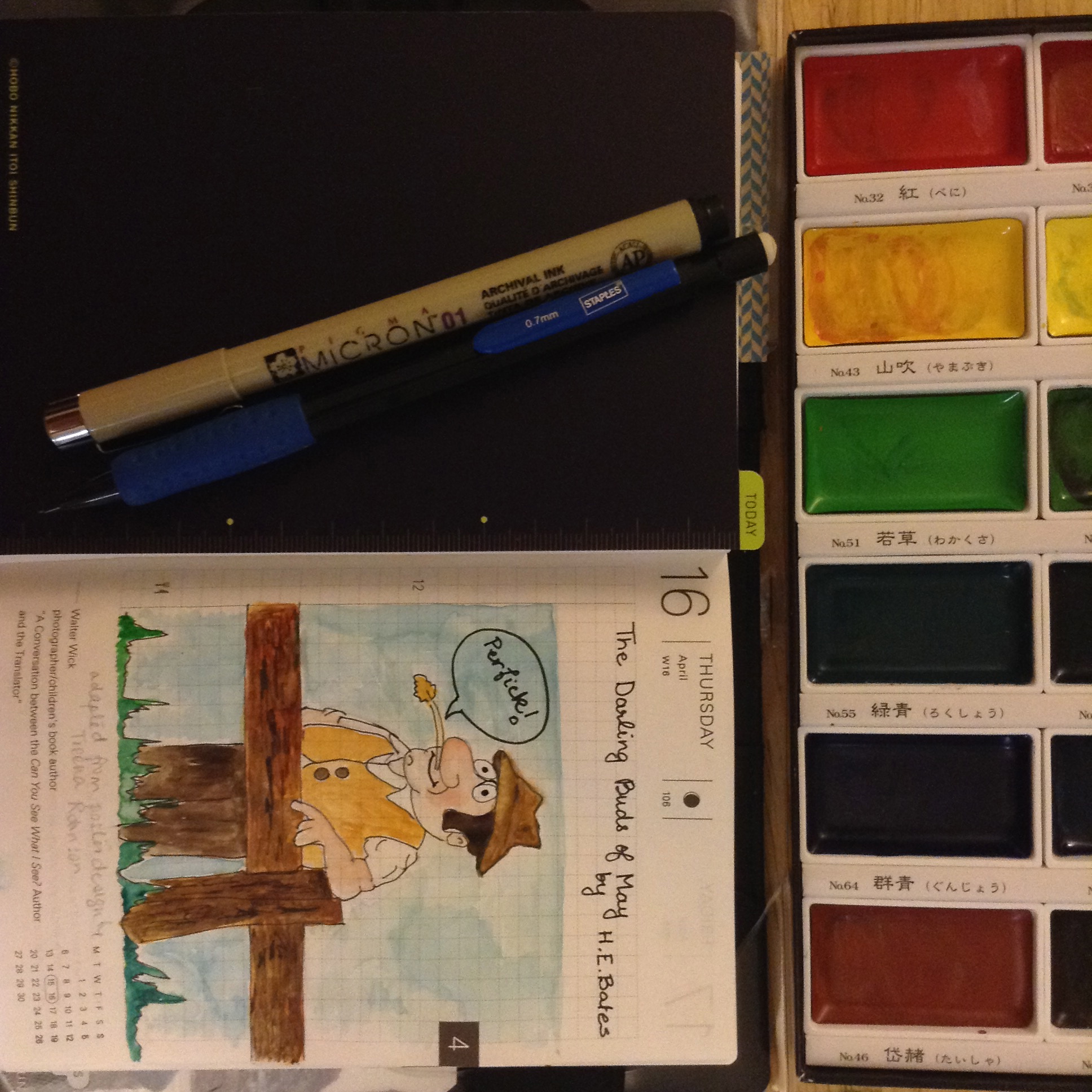
Adapted from a poster designed by Treena Robinson

Adapted from a poster designed by Treena Robinson

Week Nineteen 2015- A Library Haul and Other Musings

FullSizeRender-2Week Nineteen was packed full of events and books. We celebrated multiple birthdays in our small family and there was lots of cake and good food. I made a pasta drenched in lemons, olive oil, thyme, parsley, garlic and with Italian sausage and red peppers. It was based on a recipe from Laura Vitale who is a great favorite in our household. Our chocolate birthday cake had pastel colored  tiny sugary confetti on it that Little M called ‘little M and M’s’.

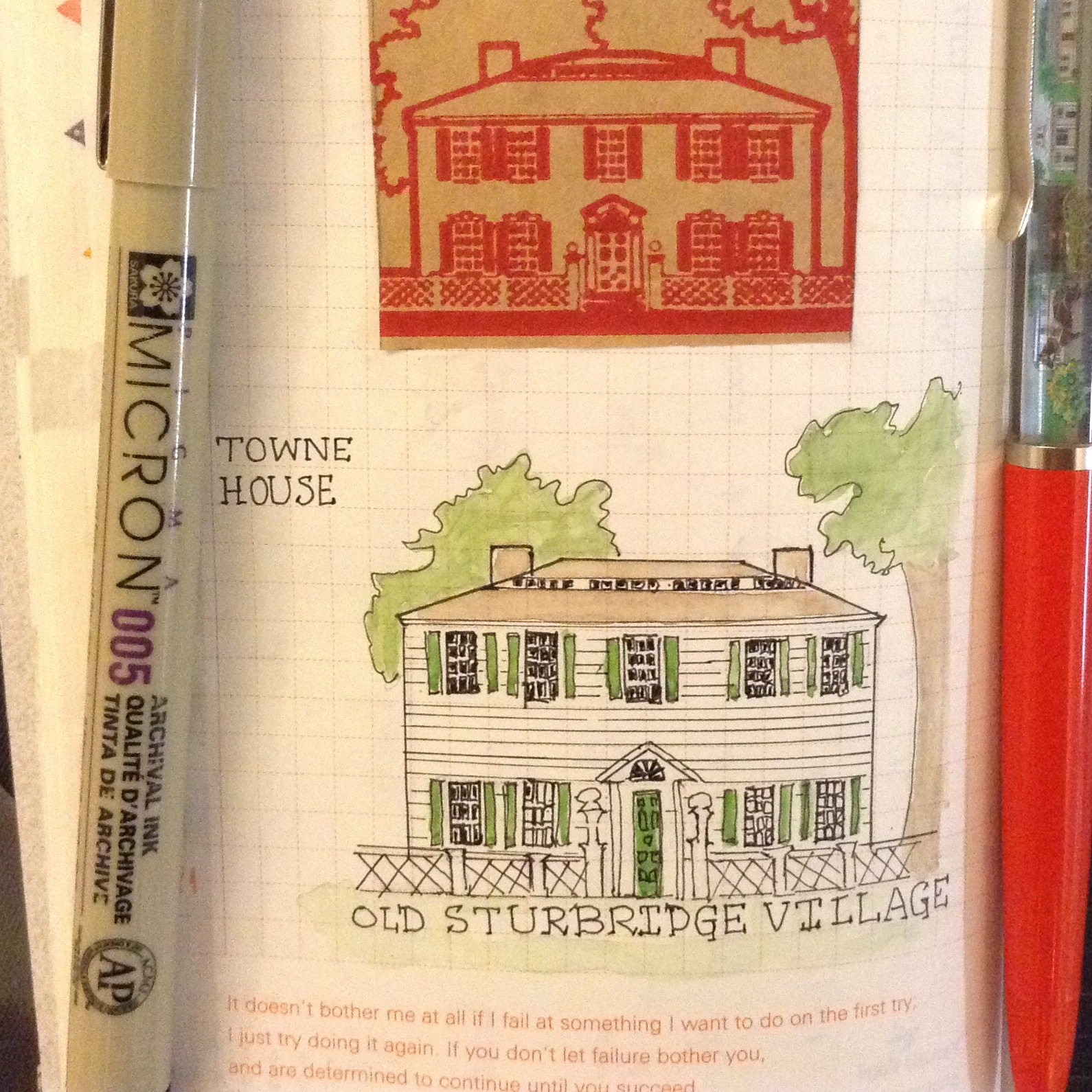
On Mother’s Day we visited Old Sturbridge Village (OSV) located in Sturbridge, Massachusetts, which is an outdoor historical museum showcasing some authentic period houses that have been moved from their original locations to OSV. Actors dress up in period costume and tell stories of their past. We badgered them with numerous questions, especially in the  village store selling merchandise of all kinds. Being particularly interested in the stationery and art supplies of the day I was fascinated to find an old watercolor set which would have been popular- perhaps with young ladies painting botanical illustration. Here it is. Isn’t it beautiful?

IMG_0837

Back to the Library Haul. Little M enjoyed Fraggle Rock recently. I decided to pick up the Complete Season 1 of Fraggle Rock along with a book. The book is more like a comic strip and a little too advanced for Little M. Nevertheless she is having a good time looking at the pictures.

Recently I enjoyed re-reading the Darling Buds of May by HE Bates. I decided to pick up the dramatization of the various books. It features stellar performances from the inimitable David Jason as Pop Larkin, Pam Ferris as Ma Larkin and a very young Catherine Zeta-Jones as Mariette.

I had requested a vintage crime novel  from the library by John Dickson Carr called the Mad Hatter Mystery. It came in this ancient omnibus edition. Looking forward to my first book by this acclaimed master of the locked room mystery.

Lastly, Emma: A Modern Retelling was lying on the new book shelves at the library. I have too many books to finish at the moment but I could not resist picking this up. McCall Smith is one of my favorite modern day writers. I wonder what he will do with Austen’s masterpiece?

I leave you with some pictures of Old Sturbridge Village and an entry in my art journal.  See you next week!IMG_0807IMG_0733IMG_0738FullSizeRender-3

Library Haul Week Eighteen- 2015

IMG_0352Week Eighteen of 2015 bade farewell to April and ushered in the month of May. Finally we have apple and cherry blossom gracing trees that had been naked for too long. Daffodils are blooming along with tulips and every morning we awaken to sweet birdsong. The days are long and the sunsets glorious. May is my birthday month. This year I received a set of glorious Faber Castell polychromos colored pencils. I can’t wait to experiment with them.

With the new set of colored pencils in mind it seemed a good idea to request Ann Swan’s book on creating Botanical portraits with colored pencils. The book has several tutorials for creating very realistic botanical illustrations and the tools and colors needed to replicate them. I am finding it an interesting read.

Next on the reading list is Mary J. Macleod’s book ‘Call the Nurse’. The book tells of an English family’s migration to a Scottish Hebridean island. The exact identity of the island is not disclosed but it could be one of the following islands forming the Outer Hebrides. I could be wrong.

IMG_0463

Mary J. Macleod’s family fulfilled their dream of living on this Hebridean island and moved there in the early 1970’s. Macleod earned her living as the island’s nurse. The book tells of encounters with the island’s many inhabitants, their unique way of living, the isolation and beauty of the island and the challenges of living in such remoteness. It is nice to read a book that describes a place that I would love to visit. I am still in two minds about the writing style but of course the story is a unique one and worth reading.

For Little M, this week’s library haul brought to her the pleasures of Jim Henson’s inimitable Fraggle Rock. I watched this series as a child and I just adore it. The puppets are marvelous but the best feature of the shows is the music.

Lastly we are playing catch up with Downton Abbey Season 5. This drama continues to entertain us. Dame Maggie Smith- the dowager is the crowning glory of the show but the various plots and sub plots also hold great interest. From a historical perspective this show is a joy to watch too witnessing the collapse of the English aristocracy and the blurring of class barriers.

I will leave you this week with a recap of some of my journalling efforts from the Month of April. Have you read or watched something interesting recently. Do share!

IMG_0393IMG_0394

Whistle for Willie by Ezra Jack Keats

Processed with VSCOcam with m3 preset

Title: Whistle for Willie

Author and Illustrator: Ezra Jack Keats

Published: 1964

Main Characters: Peter, his Mother and Father, Willie the dog.

Short Synopsis of the Story: Peter wishes he could whistle. He wants to learn how to whistle so that he can call his beloved dog named Willie. He tries and tries different ways to whistle but no sound comes out from his lips. He goes home and tries on his Father’s hat and then tries to whistle again but even that fails. Peter hides in a cardboard carton that he finds in the street and tries to whistle yet again and this time a whistle is heard! Peter’s dog Willie rushes towards him and responds to the whistle.Later on, Peter’s mother asks Peter to run an errand for her. Peter whistles all the way there and back followed by faithful Willie.

Favorite Part of the Story:  The story is such a simple one. The images are very striking and are drawn with sweeping, colorful brushstrokes that immediately conjure a lively image of city life. We are immediately drawn by the pictures to a young boy’s visualization of his place in a busy city. The story teaches us of the importance of persistence and determination but this is done in such a subtle way that we do not feel that the story is overly moralistic. The way Peter puts his Father’s hat on and feels that this would magically conjure up his whistling powers made me smile. Lastly, the love between a small boy and his dog are endearing.

Library Haul Week Sixteen-2015

Processed with VSCOcam with t1 preset

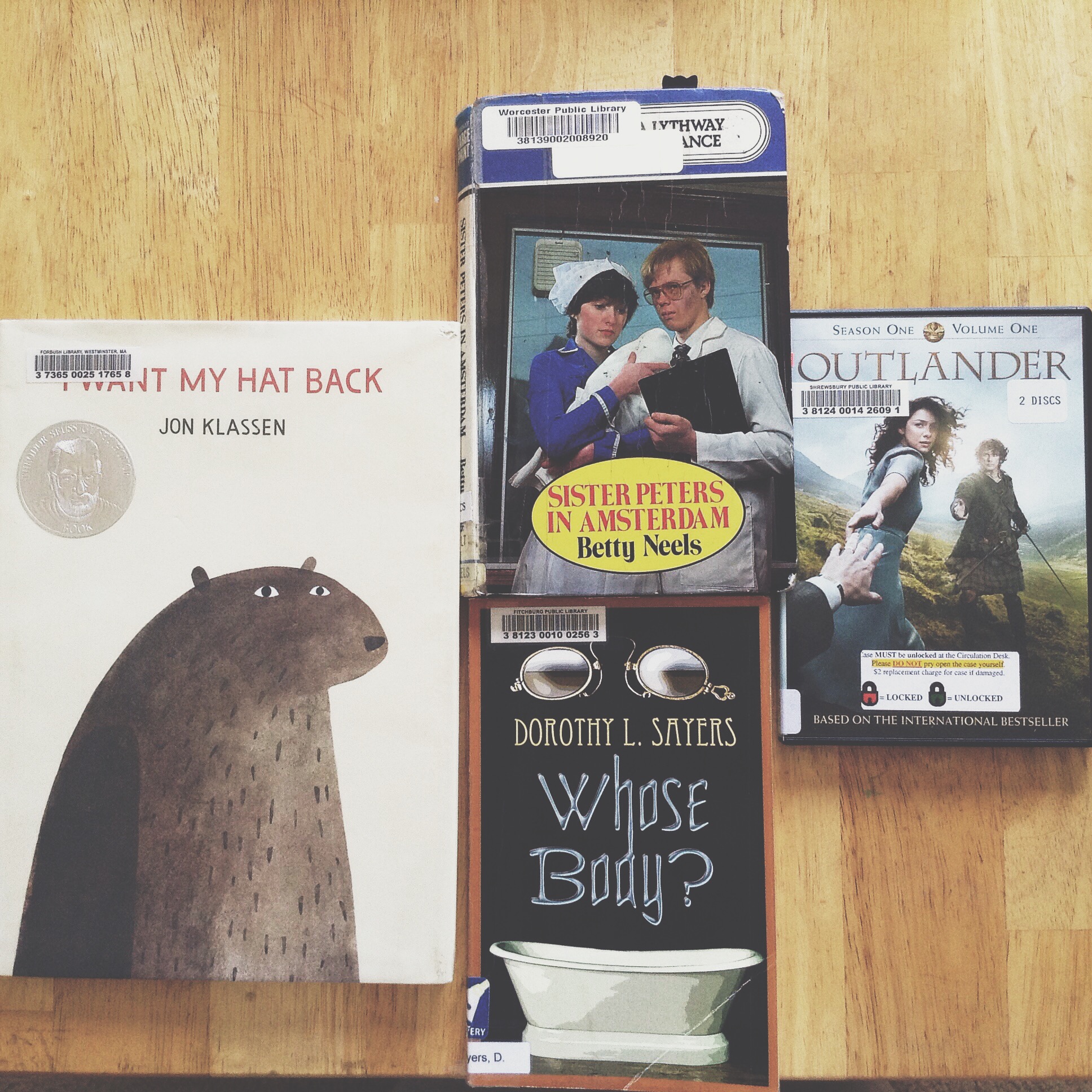
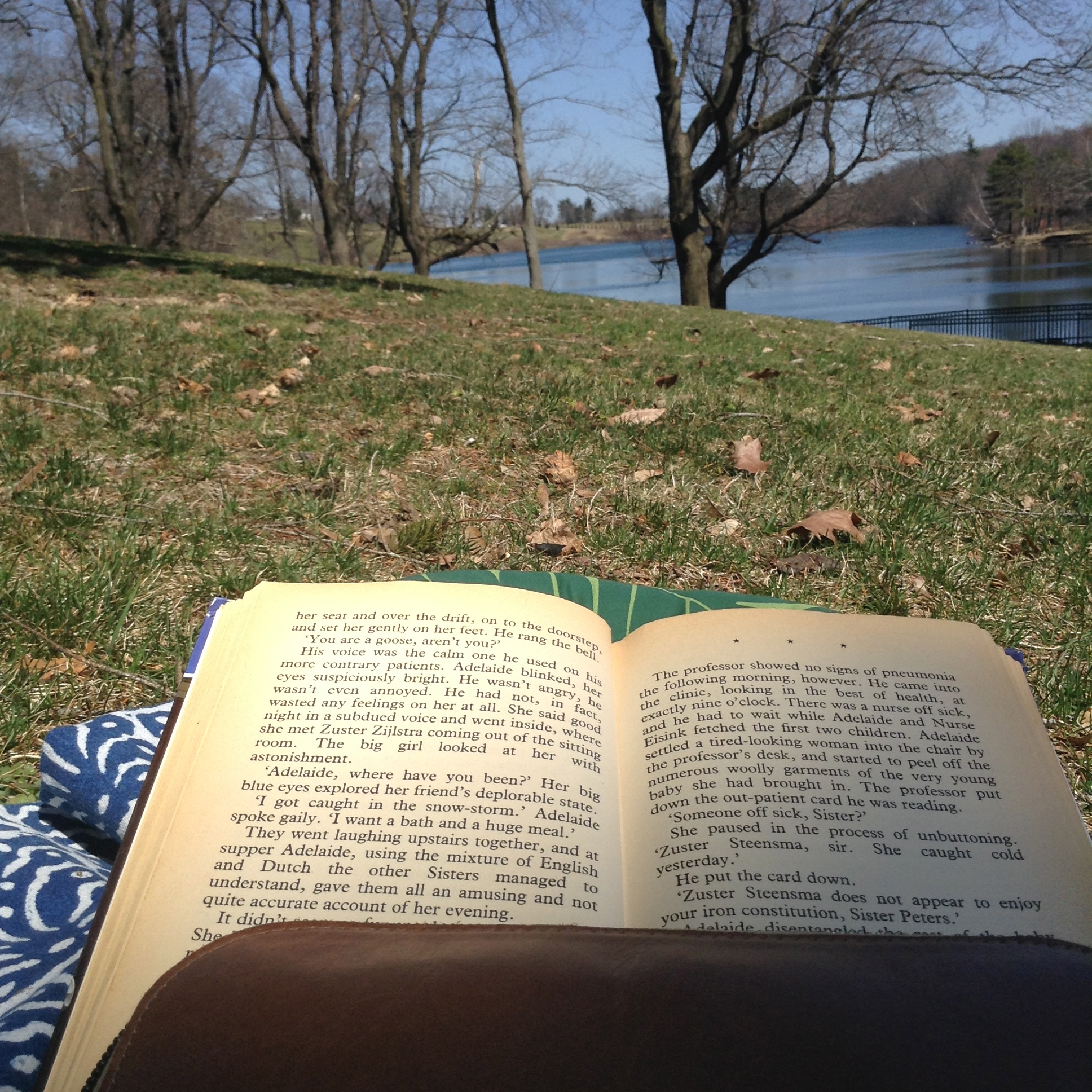
We’ve had glorious weather this past week. The snow has melted, birds are chirping, the first of the gentle buds are forming on the tips of branches. Nature is poised to leap into Spring. We went on a glorious picnic on the weekend. I read a Betty Neels book- ‘Sister Peters in Amsterdam’ on the picnic. I had never read Betty Neels before and was recommended this book by a friend on Instagram. When I received the book from the library I laughed at the funny cover design!

IMG_0470Since then I’ve read a couple of her books and have come to the conclusion that her stories  are a nice, very light read but are a tad formulaic. There is usually a young British nurse, a Dutch doctor and the romances are very genteel… at least the ones I’ve read. What I liked most were descriptions of food, nature, clothing and how charming the books are, if a little repetitive. They are set in interesting locations. Madeira, Amsterdam, Delft and rural England featured in the ones I read. The books are not always very complimentary to women, however. The women always forsake their careers for marriage- which seems to be the be all and end all purpose of life. So if you are willing to overlook the ‘datedness’ of these book you may enjoy them.

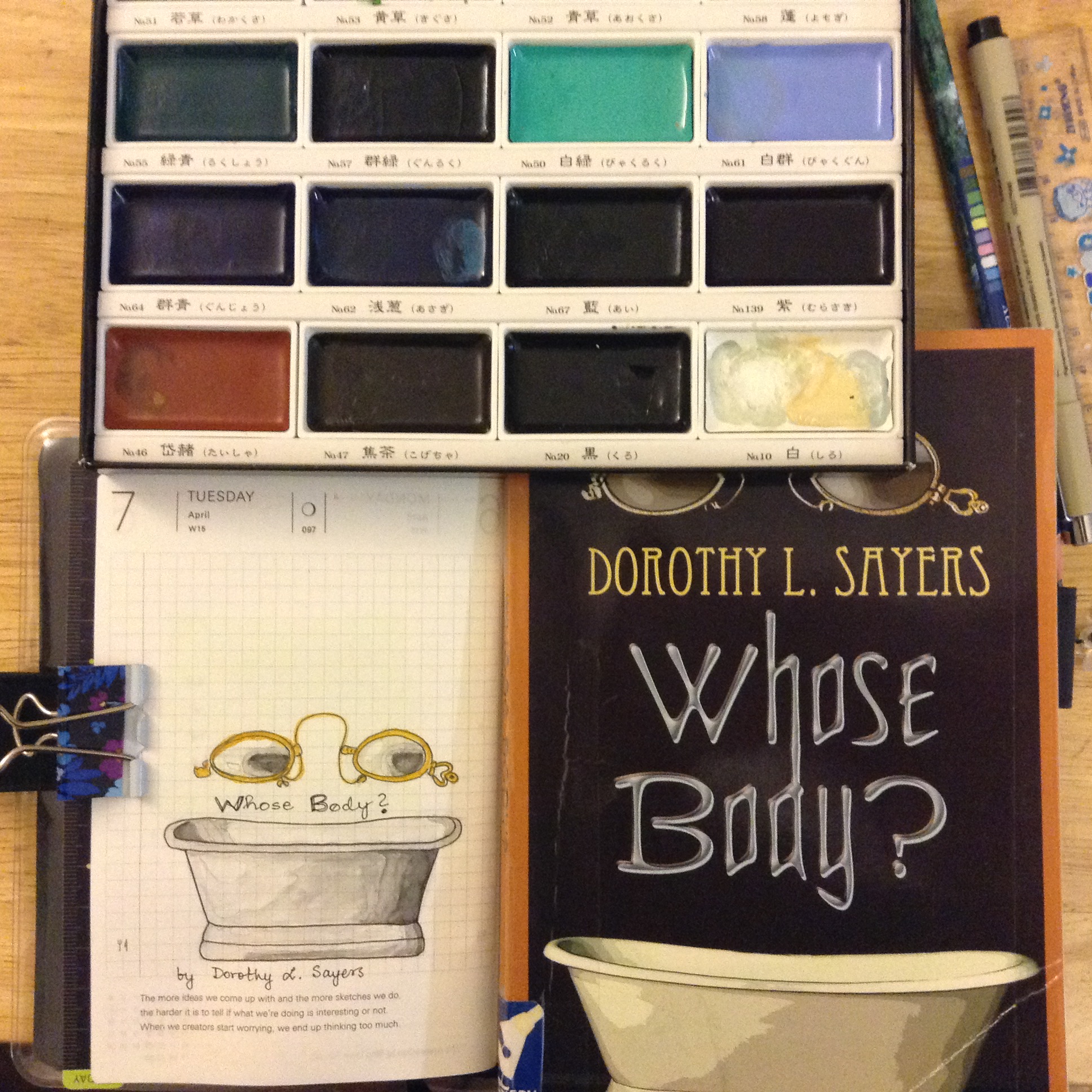
‘Whose Body’ by Dorothy L Sayers was my first book by this author who I have been meaning to read forever. I enjoyed the mystery aspect of the story and am eager to read more about Lord Peter Wimsey. Find the full review of the book here.

‘I Want my Hat Back’ by Jon Klassen was an interesting book for Little M. It was funny and quirky and just a tad cruel. Little M  did not fully comprehend the ending and I didn’t force the truth upon her.

Lastly we have been hooked on the dramatization of the Outlander. Last year I read the book and had mixed feelings about it. I loved the premise of the book- a woman slipping back into time several hundred years into medieval Scotland with a chance to change history. I found the book rather long and some of the descriptions gruesome but overall  I enjoyed it. When I saw the DVD at the library I leapt at the chance to see it. The picturization of rural Scotland is just captivating and the dramatization very well done. Cannot wait to catch up with the second half of the series which is airing now on television.

A good week. I will leave you with my journal entry for the cover of Sayer’s ‘Whose Body’

Processed with VSCOcam with c1 preset

Whose Body by Dorothy L. Sayers

IMG_0451

Title: Whose Body?

Author: Dorothy L Sayers

Published: 1923

Main Characters: Lord Peter Wimsey (amateur detective), Inspector Parker (Wimsey’s friend and accomplice), Inspector Sugg (Scotland Yard), Bunter -Lord Peter’s butler, a host of different suspects.

Book Setting: London, England in the 1920s.

Short Synopsis of the Story:  The body of a man is discovered in the bathtub of a Mr. Thipps, wearing nothing but a pair of pince nez. Nobody knows anything about the identity of the man and even less about how he came to be in Mr. Thipp’s bathtub.On the same day that the body is discovered Sir Reuben Levy, a wealthy  financier goes mysteriously missing. Could the two incidents be connected? Lord Peter Wimsey puts his wits to the test in order to get to the bottom of the question, aided by Parker and his faithful butler Bunter.

Thoughts About the Book: I’m a great enthusiast of the mystery novel genre especially books that hail from the ‘Golden Age’ of detective fiction. It seemed natural that I should look towards the works of one of the stalwarts of the genre – Dorothy L Sayers herself. Initially I found the character of Peter Wimsey delightful but a tad superficial. He reminded me a little of Bertie Wooster with all the hallmarks of the English aristocracy. In the opening page, Sayer’s quirkily and memorably describes Wimsey’s appearance as follows:

His long, amiable face looked as if it had generated spontaneously from his top hat, as white maggots breed from Gorgonzola.

Lord Peter lives in a block of new expensive flats opposite Green Park, dines at the Club, buys expensive rare antiquarian books, plays the piano, keeps a butler and dabbles in detective work in his spare time to amuse himself. However, as the story progresses and more details of Wimsey’s character become apparent we start to gain a greater understanding for his actions and motivation in his life. Wimsey has a great regard and respect for his butler Bunter. We learn that they both were comrades in the Great War. Bunter is therefore privy to Wimsey’s weaknesses, especially his nightmares that are the result of shell shock during the war.

Wimsey is highly conscientious. When he finds himself deeply embroiled in the mystery, he confides in Parker-

“That’s what I’m ashamed of, really,” said Lord Peter.”It is a game to me, to begin with, and I go on cheerfully, and then suddenly see that somebody is going to be hurt, and I want to get out of it.”

Parker responds to Lord Peter-

‘Life’s not a football match. You want to be a sportsman. You can’t be a sportsman. You’re a responsible person.”

The ever jocular Peter Wimsey responds –

“I don’t think you ought to read so much theology,” said Lord Peter.”It has a brutalizing influence.”

Conclusion: Its very difficult to write a review of a mystery story without giving something away but I will say that Sayer’s presents an intelligent plot in this mystery novel. What sets Sayers apart from others is the depth of her intelligence. This is evident in her wit and her ability to humanize a character. By the end of the novel not only do we start to respect Lord Peter Wimsey but we are also eager to learn more about his character and all his future detective endeavors. A great start to a detective series.

I Want My Hat Back by Jon Klassen

Processed with VSCOcam with f2 preset

Title: I Want My Hat Back

Author and Illustrator: Jon Klassen

Published: 2011

Main Characters: A bear, a rabbit, a pointed red hat and several woodland characters.

Short Synopsis of the Story: A bear has lost his hat. He politely asks several woodland creatures that he passes whether they have seen his hat or not. One particular woodland character, a rabbit (wearing a pointed red hat) rather strongly denies that he has stolen the hat and quickly dismisses the bear. Later on the bear rather sadly lies down on the ground and worries he may never see his hat again. One woodland creature comes up to him and asks him what the hat looks like. The bear says it is red and pointed and only then is struck with the thought that he has seen the hat recently on someones’s head! He travels back to the rabbit and accuses him of stealing the hat.

Next we see the bear sitting down with the hat back on his head. A passing squirrel asks the bear if he has seen a rabbit. The bear protests very loudly that he has neither seen nor eaten a rabbit. He asks the squirrel not to ask him anymore questions.

Conclusion: I enjoyed the part of the story where the rabbit and the bear protest too loudly especially when they are in the wrong. This made me laugh. However, the fact that the bear had eaten up the rabbit to retrieve his hat was a hard story to deliver to my three year old. When I told her, she very aptly responded with,”Did he need to eat the rabbit up?”

Did he indeed?

Library Haul-Week Thirteen -2015

Processed with VSCOcam with m3 preset

Week 13 is the week that Spring was supposed to arrive. Instead we had snow in Massachusetts. Admittedly, not knee deep, masses and masses of snow. But enough snow to remind us that the idyllic springtime picture of daffodils, violets, cherry blossom, green buds on trees and chirping birds was a far cry away. On a positive note, cold temperatures are conducive to staying indoors and enjoying books and movies.

We brought home books for Little M- namely The Story of Ferdinand by Munro Leaf and video content in the form of Bambi. This was a re-watch, clearly Little M liked this movie enough to want to see it again.

For me this week was hit and miss- I followed up my recent reading of Christianna Brand’s wonderful mystery novel ‘Green for Danger’ with its Criterion Collection movie counterpart. As (nearly) always the movie failed to live up to the original book. One of the major problems was that the book was still very fresh in my memory- I remembered all the subtle nuances of plot and had already even etched out how the characters looked in my mind. One of the major characters had been omitted and also a major love story completely wiped away and this thoroughly upset me. Do read the original book if you get a chance and have an inclination for reading crime fiction. I loved the book so much that I even painted the cover in my journal.

‘Nightingale Wood’ by Stella Gibbons was a beautiful, 1930s Cinderella story told to perfection. Read the full book review here. Cannot wait to read EVERYTHING else by her starting with Cold Comfort Farm. I will leave you this week with an attempt at sketching the cover of Green for Danger in my journal. Cheerio!

IMG_0482

The Story of Ferdinand by Munro Leaf

Processed with VSCOcam with t1 preset

Title: The Story of Ferdinand

Author: Munro Leaf

Illustrator: Robert Lawson

Published: 1936

Main Characters: Ferdinand the bull.

Short Synopsis of the Story: The story is set in Spain. Ferdinand the bull is a placid creature. When his fellow bulls are busy playing aggressive games and fighting with one another, nothing pleases Ferdinand more than to sit  quietly by himself and enjoy the scent of the flowers. One day when Ferdinand is much older, several men arrive form Madrid to pick a bull for the fighting. They try to pick the most aggressive bull. On that particular day Ferdinand gets stung by a bee and jumps up and down like crazy. The men from Madrid think he will be the perfect bull for the bullfight and pack him into a cart to be taken to Madrid. On the day of the bullfight, the stadium is packed with excited onlookers. The Banderilleros, Picadores and Matadors enter the stadium and are shivering with anticipation and fear. At last Ferdinand emerges into the ring and to everyones surprise sits down quietly and sniffs the fragrance of the flowers in the ladies’ hair. There is no bull fight that day and Ferdinand is escorted back home where he continues to lead a peaceful life.

Favorite Part of the Story: The message of non- violence is an important one to be taught to children from an early age but I think the concept of bull fighting was beyond the scope of my three year olds understanding. Nevertheless, a worthwhile read to go back to in a couple of years I think.

The Day the Crayons Quit

Processed with VSCOcam with t1 preset

Title: The Day the Crayons Quit

Author: Drew Daywalt

Illustrator: Oliver Jeffers

Published: 2013

Main Characters: Duncan, The different colored crayons.

Short Synopsis of the Story: One day during class, Duncan goes to opens his crayons and discovers a stack of letters with his name written on them. Each of his crayons has written him an individual letter airing their grievances regarding Duncans usage of that particular crayon. Duncan in an effort to please each and everyone of his crayons draws a beautiful picture incorporating all the colors of his crayons.

Favorite Part of the Story: The beautiful picture drawn in crayons at the end of the book is perhaps the highlight of the story. All the colored crayons mentioned in the previous pages makes a special contribution to the picture which is characterized by wild animals, sea creatures, boats, wizards, locomotives, and even a special appearance from Santa Clause himself! Of special interest are the green sea, the yellow sky, orange whale and other anomalously colored entities.

My three year old listened with fascination to the individual stories each of the crayons had to tell, the descriptions and pictures of the characteristic objects that the particular crayon in question is used to illustrate. For example red  is used to draw apples, strawberries, fire engines and Santa’s costume.

It is a nice lesson in color for small children, and a visual treat for children and adults.

Moreover, it reminds us that artistic creativity knows no boundaries. We have the artistic license to paint green seas, orange whales and pink sea monsters.