Martha in Paris by Margery Sharp

Martha in Paris is the second book in Margery Sharp’s trilogy based on the character of Martha. Find the review for the first book in the series, The Eye of Love here.

  • Title: Martha in Paris
  • Author: Margery Sharp
  • Published: 1962 by Little, Brown and Company Toronto
  • Location of the story: Paris
  • Main Characters: Martha (an art student), Eric Taylor (an English bank employee in Paris), Eric’s Mother, Madame Dubois(Martha’s guardian in Paris).

Martha in Paris picks up the story of Martha nearly a decade after where the The Eye of Love left us. At that juncture, Martha (an orphaned child living with her aunt Dolores) and her artistic talent had been discovered by a rich patron, Mr Joyce, a friend of the family. In the subsequent years Martha’s talent has been nurtured with special art training.

Martha in Paris recounts Martha’s student years in Paris. Here, for two years she studies art under the guidance of one of France’s most eminent art instructors. Her tuition and expenses are met by the kind aegis of Mr Joyce, Martha’s wealthy benefactor.

Mr Joyce aptly observes:

“These next two years will show,” thought Mr. Joyce. “Sink or swim!”

Whilst in Paris, Martha meets an Englishman by the name of Eric Taylor. They meet each other regularly under the tromp l’ oeil’ statue of Tragedy and Comedy in Tuileries Garden where Martha sits on the exact same bench everyday to enjoy her half-French loaf stuffed with delicious charcuterie. Eric, hungry for companionship with a fellow English person tries to engage Martha in lively discourse. He mistakes her lack of conversation for reticence, little knowing that Martha would rather shun any kind of interaction whatsoever.

After a week of one-sided discourse on Eric’s part, he invites her to dinner to meet his mother on Friday night. Nothing can persuade her to accept his invitation until she hears of the bathroom renovations the Taylor’s have installed in their apartment. Martha in desperate need of a comforting, hot bath quickly changes her mind and accepts Eric’s invitation with great alacrity.

“Is the bath vitreous?” asked Martha.

“If you mean is it a sort of china, yes,” said Eric.”Pale green.”

Her defences pierced at last-

“What time on Friday?” asked Martha.

Martha arrives at the Taylor’s apartment at the appointed time on Friday, with a mysterious paper packet. Eric mistakes the packet as a thoughtful hostess gift but notices that Martha fails to bestow the gift to Mrs Taylor. Promptly upon arrival Mrs Taylor shows Martha around, based upon the understanding that Martha has a keen interest in viewing the apartment.

As soon as they enter the bathroom and Martha has admired the facilities she laments that she has not had a proper hot bath in months! One thing leads to another and before very long, in fact the ten minutes remaining before dinner, Martha  decides to take a hot bath much to Mrs Taylor’s astonishment.

“I’ll have it now,” said Martha, swiftly opening her packet, which in fact contained one clean vest and a pair of clean knickers.”

Despite Martha’s unconventional behaviour, Mrs Taylor tolerates and indeed welcomes Martha’s weekly visits. This is because Mrs Taylor does not find Martha’s appearance or personality intimidating.

The weekly Friday visits and baths become a ritual and Martha and Eric find themselves in a situation which is too close for Martha’s comfort. How Martha deals with the resultant circumstances of her relationship with Eric forms the theme of the remainder of this novel.

Sharp’s writing is at her wittiest best in this novel. The stolid, determined and somewhat selfish artistic temperament of Martha is fully manipulated to render moments of extreme comedic humour in the novel.

Quite disconcertingly, however, Martha’s  ‘artistic temperament’ fills us with dismay as we notice a complete absence of love and compassion.

I enjoyed the quirky book and the unusual ending made me immediately put in a library requisition for the third book in the trilogy- Martha, Eric and George.

The Priory by Dorothy Whipple

img_2027-2

Title: The Priory

Author: Dorothy Whipple

Published: 1939

Republished by Persephone Books

Setting: Rural Midlands in the Interwar Years

Main Characters: Major Marwood, Anthea Marwood (his second wife), Christine Marwood (elder daughter of Major Marwood), Penelope Marwood (younger daughter of Major Marwood), Nurse Pye, Aunt Victoria (spinster sister of Major Marwood), Mr. James Ashwell (wealthy former mill owner), Nicholas Ashwell (son of James Ashwell).

She saw for the first time that the history of Saunby was a sad one. It had been diverted from its purpose; it had been narrowed from a great purpose to a little one. It had been built for the service of God and the people; all people, but especially the poor.

‘And now it serves only us,’ she thought.

                                                                           – Christine Marwood.

In Dorothy Whipple’s novel, ‘The Priory’ , Saunby Priory is a large landed estate associated with the ruins of a medieval Priory. In olden times, pilgrims had sought rest here, on their way to Canterbury from the North. Kindly monks had allayed their hunger and tiredness with bread, beer and a place to sleep at night. After the Dissolution of the Monasteries during the Reformation the Priory passed on to the Perwyns and thereafter to the Marwood family in 1793.

The story commences a few years prior to the onset of the Second World War. The state of affairs of Major Marwood’s country estate, Saunby Priory, lies as dilapidated as the ancient ruins that lie on the western edge of the manor house. The Major is a widower, his two young daughters, Penelope and Christine, aged 19 and 20, run wild all day on his estate, his elderly sister Victoria is unable to guide his household affairs and he lies on the verge of financial ruin. Every year to save himself and Saunby he sells a small parcel of property associated with his estate. Then, at the august age of fifty, he meets Anthea Sumpton and recognizes in her a woman who to his mind has the ideal characteristics of a second wife, i.e. she is sensible, devoted and no longer young. Importantly, she will in all probability not want to start a family. He marries her so that someone at last will take his household to hand and manage his life: his servants, his children and his annual fortnight of summer cricket.

Anthea Marwood feels that she is an unwanted intruder in the Marwood household.

The occupants of Saunby looked at her when she came into a room as people in a railway carriage look at a traveller who gets in later on the journey. The Marwoods, she was beginning to find out, were the sort of people who like a carriage to themselves

Despite the initial setback Anthea faces, she quite slowly but steadily starts to carve a niche for herself in the household.

Quite early on in the marriage, Major Marwood realizes with dismay that his marriage of convenience is turning out to be very inconvenient for him. Anthea, contrary to plans is expecting a child, an added expense in his mountain of debts. Anthea, focuses all her attention in gathering provisions for her child and securing his/hers future.

In the meantime, in a whirlwind romance, Christine Marwood falls in love with Nicholas Ashwell, son of a wealthy former mill-owner when he visits Saunby during the cricketing fortnight. Their infatuation results in a marriage proposal that Christine accepts. Christine on the eve of her marriage is faced with the unwelcome prospect of leaving Saunby, a place that has been her sanctuary for the entirety of her life.

‘I don’t want to go’ thought Christine…

‘I want to stay here, as I am.’

Nicholas was a stranger. A few months ago she had never heard of him and now she was going away with him, throwing in her lot with his. What was love that it made you think you could live with a stranger? You ought to find out first, you ought to be sure.”

As Christine embarks on a new, unfamiliar life in the coastal seaside town of Mansbridge, she finds herself missing Saunby more and more. She realizes that married life with Nicholas is not enough to fill the gap left in her heart by her absence from Saunby. Her married life is far from idyllic- Nicholas’s idle lifestyle, gaming, drinking and frittering his life away makes her long for her former home more and more.

Whilst visiting Saunby during her sister Penelope’s wedding she is reluctant to go home to Mansbridge and her husband.

There were some black and yellow striped caterpillars that covered the tansy plants at Saunby…If you moved them to another plant they either died or made their way back to the tansy. Christine, noticing them again now, wondered if she was going to be like that about Saunby; unable to live anywhere else.

However, life decides to take a sharp turn for the worse for Christine and she finds herself separated from her husband, each of them fighting their own separate battles under heart wrenching circumstances. Can Saunby save their future, their feeling of self-worth and purpose in life?

It is difficult to summarize the scope of a large 500 page novel like ‘The Priory’ within the space of a few paragraphs. The book is so much more than the collective story of personal incidents, trials and tribulations of a household. Whilst reading the story it is hard to gauge the actual focus of the story. Is ‘The Priory’ the story of Anthea Marwood’s gradual adjustment to her new household, her determination to secure a stable future for her children, the story of Christine Marwood’s move to the Ashwell family at Mansbridge and her yearning for Saunby or is it the story of Nicholas Ashwell’s frustration in life for being nothing more than a rich man’s son incapable of finding his own way in life? ‘The Priory’ is the summation of all these stories and more. It deals us a sharp lesson in the fragility of good fortune in life.

At the heart of the story is the medieval Priory and the attached house at Saunby. Serving the purpose of just a roof over the heads of a single household it is a drain of individual resources and is too large and unruly to manage by a single person. Essentially, ‘The Priory’ is the story of how the future of Saunby Priory might be diverted to recover the livelihoods, dignity and self-worth of a large community of people, united in their purpose. It is a beautiful novel, worthy of the highest praise and Whipple is an author, whose writing I look forward to reading more of, in the near future.

Goodnight Moon by Margaret Wise Brown

Title: Goodnight Moon

Author: Margaret Wise Brown

Illustrator: Clement Hurd

Published: 1947

Main Characters: a little bunny, an elderly lady bunny.

Short Synopsis of the Story: It is seven o’clock at night and a little bunny in striped blue pajamas is lying in bed in his green bedroom. There are many objects in the green room that are described in great detail- a telephone, a balloon, some kittens and a pair of mittens and also an elderly lady bunny sitting by the fire knitting, willing the little bunny to go to sleep. The large bedroom window is partially draped to reveal a midnight blue night sky with many stars. The bright lights in the green room gradually grow dim, casting light and shadow across the objects in the room, lulling the little bunny into sleep. As we say goodnight to each little object in the room, the bunny gets sleepier and sleepier, the rooms gets darker and darker, the stars get brighter in the night sky and the moon appears like a white lump of cheese. Soon the green room is completely dark except for the light shining in the red doll’s house and the red flames of the fire. The little bunny falls asleep.

Favorite Part of the Story:  This is the quintessential bedtime book. Visually it is a very appealing book. The details of the little objects in the room are captivating. The pairing of the beautiful images with the simple repetitive rhyme of the story lulls us into sleep. The transition of the lighted green room into the darkened green room, illuminated by the starry night sky outside and the doll’s house lights inside is perhaps the most memorable part of the story.

This is a nice book to introduce to children from a very early age as a daily bedtime ritual. It is understandable why this is a timeless classic for children.

Summer of 2015 Holiday Reading

We will be visiting our hometown of Kolkata in India during the month of August. I haven’t been to Kolkata for five long years. I can’t wait to catch up with friends and family, eat savory street side snack food and be overwhelmed all over again by the sights and sounds of the city. Though it is essentially a holiday, I will be taking some work with me. But, I expect that in between socializing and working,  I will have a little time to myself to catch up on my reading.

It is such a delicious task to select books to read on a holiday. I find the Kindle so handy for such circumstances. I can pack a huge library within a sleek gadget and I don’t even have to feel ashamed about hoarding so many books! Even though I may not end up reading a single line, it is comforting to know that the books are close to me and can be reached easily if I need them.

Although I do enjoy using my Kindle, I also really like reading from the Kindle app on my iPod. It is a little narrow and you do have to flip the page every few seconds but It is very convenient for reading in bed. I can lie down and read on my back (my favorite reading position) and my arms don’t hurt.

Since I don’t expect to have Wi-Fi in Kolkata (I will have internet access in the form of a data port inserted into my laptop) I’ve downloaded my books in advance. I thought it might be fun to share a look at the books I will be reading on the trip. They represent the ultimate in my concept of comfort reading.

FullSizeRender

The author’s writings just take me to a calm and relaxing place. They are often witty, light and often convey a strong sense of place.

The Unbearable Lightness of Scones by Alexander McCall Smith is the fifth installment in the 44 Scotland Street Series set in Edinburgh, Scotland. The series was originally published in serial format in a Scottish newspaper and still runs to this day. Apart from providing delicious glimpses into Edinburgh city life, the stories are quirky, and have a variegated cast of characters. They make me smile and each short chapter is the perfect small morsel to fit into 10 minutes of reading time.

I am finishing off The Enchanted April by Elizabeth von Arnim and enjoying it immensely. It is the perfect summer read. It takes place in Italy. Four, lonely women decide to rent a medieval castle together for the month of April to escape their everyday lives in London. The writing is humorous and the characters well drawn.

Barbara Pym is a favorite author of mine and I have not yet read Jane and Prudence. Pym is often compared to being a latter day Jane Austen. I find her writing wry and intelligent. I cannot wait to dive into it.

I also enjoy reading books in the epistolary format especially those set during war times. The Guernsey Literary and Potato Peel Society and These Wonderful Rumours by May Smith particularly spring to mind as books from this genre. When I read These Wonderful Rumors last year, many parallels were drawn between it’s context and that of the ultimate wartime diary- E. M. Delafield’s The Provincial Lady Diaries. A trip is a wonderful opportunity to read books in this short chapter format.

Betty Neels is the ultimate escapist read. Please don’t read her books if you have a very rational mind. Nothing makes sense in her stories. The Dutch doctor always rescues the English nurse and marries her and whisks her away to the Netherlands into a loveless marriage that blooms later on. To me though, the books are very charming and provide tiny glimpses of a side of Europe that I am unfamiliar with.

Lastly, a book from my favorite genre- mysteries. I have heard many good things about A Scream in Soho. It is a part of the newly re-released British Library of Crime Classics series. The cover looks lovely with a vintage feel. Need I say more?

In addition to e-books I decided to download the free audiobooks app on the iPod. I intend to walk everyday to get in my daily exercise and I thought listening to some audiobooks would be perfect to listen to during my walking. The librivox audiobooks are free to download. I rarely read classics nowadays, so I thought I would download a few classics. The following are the audiobooks I’ve downloaded:

IMG_1516

That, in a nutshell, is a glimpse into my summer holiday reading. Any bets that I won’t even finish a single book? Never mind. I won’t be heartbroken if that happens because I know that the time will have been filled with other enjoyable pursuits. Hope you are having a wonderful summer (or perhaps winter) wherever you are. I’m off to venture forth into a summer adventure.

Preparing for a trip to Martha’s Vineyard, a Library Haul (week 25, 2015) and my obsession with stationery

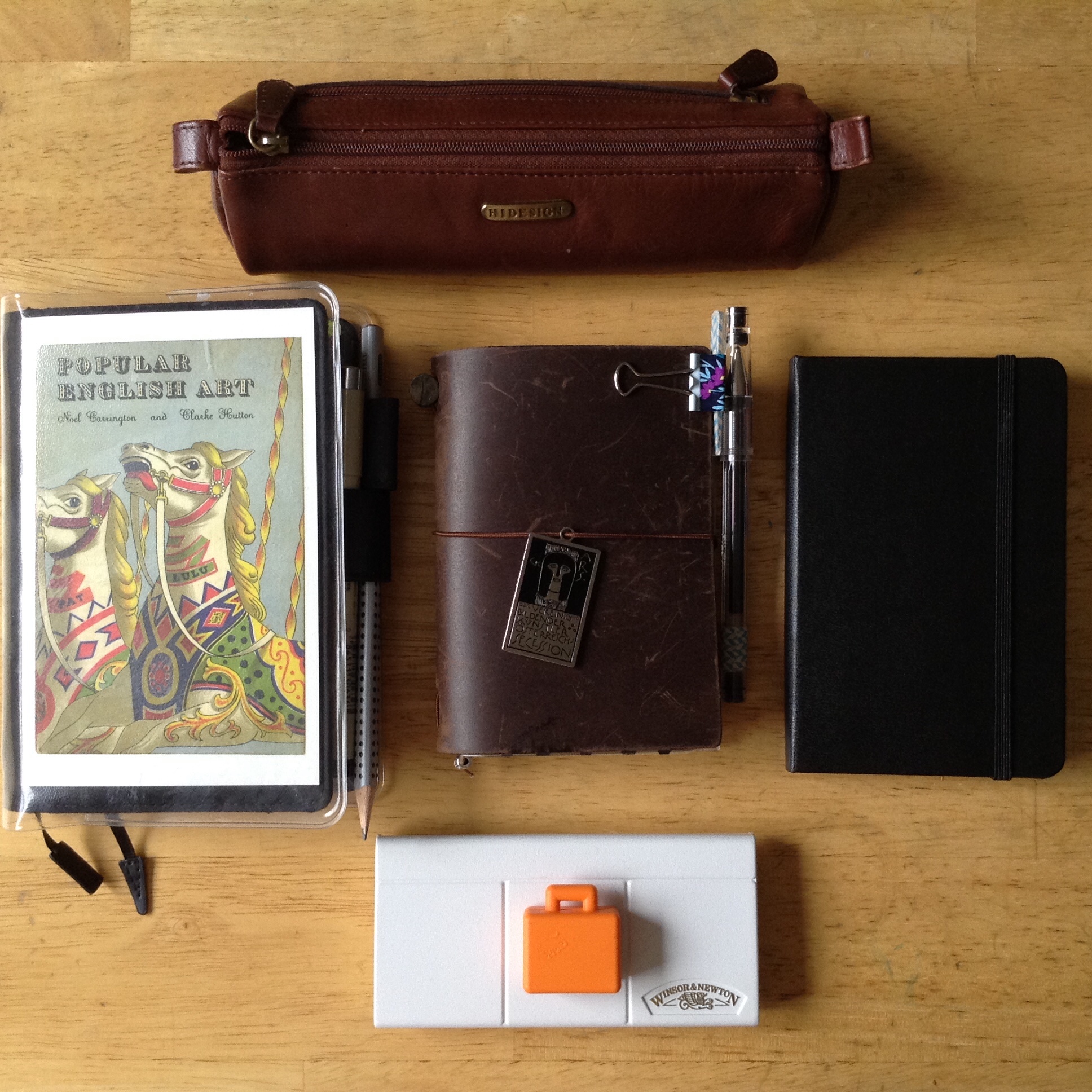
My brother of Budgettraveller.org fame is visiting us this week. We will be going on a mini-holiday with him to the island of Martha’s Vineyard. As usual, it’s more about preparing for the trip for me. I like to plan, make lists of things I would like to do, see and eat on the trip… and there is one thing you should know about me. I love stationery. Notebooks, pens, pencils, erasers, rulers, pencil pouches- I love them all. This is the first trip on which I will be using my Midori Traveler’s Notebook or MTN for short. It looks like this.Processed with VSCOcam with t1 preset

Basically, its a piece of beautiful dark brown leather that can house several small notebooks that you can take on your travels with you or use at home. One of the three notebooks I have inside has a long list of things to do in Martha’s Vineyard. Of course there’s a section devoted to the bookshops and public libraries on the island ( typical of me and my priorites in life).

Something else that I am planning are the art supplies that I want to take with me.

FullSizeRender-6

Here’s what I am thinking: my mtn, the hobonichi for journaling which I have neglected in the past week, a moleskine sketchbook and a Winsor and Newton pocket paint palette. Oh, and the little orange suitcase is a tiny receptacle for holding paint water!

Something else that I am currently obsessed with is my summery watermelon pouch, immortalized forever in my art journal.

IMG_1131

I am planning to take Peter Mayle’s A Year in Provence with me. I am reading a chapter a month throughout this year and have April, May and June to catch up with. It’s the perfect book to take on travels.

Here is the library haul for this week.

FullSizeRender-5

Sometimes books on my ‘to be read ‘ list are very much pre-meditated. Sometimes, though, visiting the ‘New in Fiction’ book shelf at the library can be a very dangerous place for me. Especially if the blurb on the back seems interesting, and the front cover is appealing- you will find the book quickly disappearing into my library book bag. The Awakening of Miss Prim by Natalia Sanmartin Fenollera- had me in two seconds. Briefly the book is about Prudence Prim, a young woman who accepts a position as a librarian in the village of San Ireneo de Arnois and quite unexpectedly finds love. A young woman, a rural foreign setting, mentions of tea, cake and libraries – it was all more than I could resist. Can’t wait to start this book.

I have been on the waiting list to read The Life Changing Magic of Tidying Up by Marie Kondo since the beginning of this year. I was requester number 556 on the long list and this week my luck changed and it was my turn to take the book home. I’m not really in the mood for spring cleaning at the moment but I will give the book a quick lookover, given the great popularity that surrounds it at the moment.

Inspector Lewis is a great detective series that I thought we could watch together in the evenings at Martha’s Vineyard. I’ve not seen or heard anything about Clatterford, but it is a BBC production and therefore in my eyes can do no wrong.

Tangled- well it is a great favorite of Little M’s especially since she has a Rapunzel or ‘Funzel’ nightdress now. The poor DVD spends more time at our house than on the library shelves!

Till next week, when I will hopefully bring back travel tales, farewell friends!

Week Nineteen 2015- A Library Haul and Other Musings

FullSizeRender-2Week Nineteen was packed full of events and books. We celebrated multiple birthdays in our small family and there was lots of cake and good food. I made a pasta drenched in lemons, olive oil, thyme, parsley, garlic and with Italian sausage and red peppers. It was based on a recipe from Laura Vitale who is a great favorite in our household. Our chocolate birthday cake had pastel colored  tiny sugary confetti on it that Little M called ‘little M and M’s’.

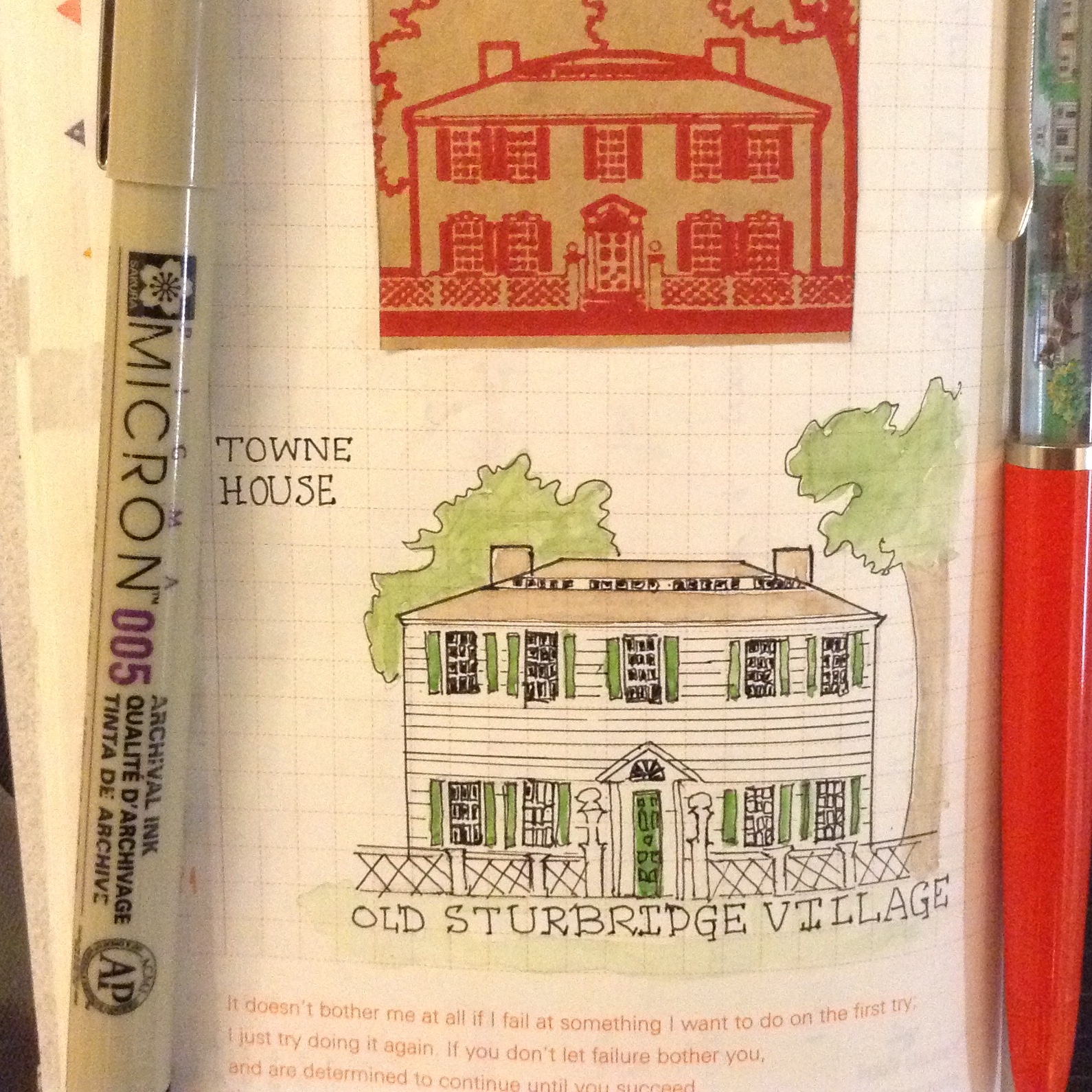
On Mother’s Day we visited Old Sturbridge Village (OSV) located in Sturbridge, Massachusetts, which is an outdoor historical museum showcasing some authentic period houses that have been moved from their original locations to OSV. Actors dress up in period costume and tell stories of their past. We badgered them with numerous questions, especially in the  village store selling merchandise of all kinds. Being particularly interested in the stationery and art supplies of the day I was fascinated to find an old watercolor set which would have been popular- perhaps with young ladies painting botanical illustration. Here it is. Isn’t it beautiful?

IMG_0837

Back to the Library Haul. Little M enjoyed Fraggle Rock recently. I decided to pick up the Complete Season 1 of Fraggle Rock along with a book. The book is more like a comic strip and a little too advanced for Little M. Nevertheless she is having a good time looking at the pictures.

Recently I enjoyed re-reading the Darling Buds of May by HE Bates. I decided to pick up the dramatization of the various books. It features stellar performances from the inimitable David Jason as Pop Larkin, Pam Ferris as Ma Larkin and a very young Catherine Zeta-Jones as Mariette.

I had requested a vintage crime novel  from the library by John Dickson Carr called the Mad Hatter Mystery. It came in this ancient omnibus edition. Looking forward to my first book by this acclaimed master of the locked room mystery.

Lastly, Emma: A Modern Retelling was lying on the new book shelves at the library. I have too many books to finish at the moment but I could not resist picking this up. McCall Smith is one of my favorite modern day writers. I wonder what he will do with Austen’s masterpiece?

I leave you with some pictures of Old Sturbridge Village and an entry in my art journal.  See you next week!IMG_0807IMG_0733IMG_0738FullSizeRender-3

Library Haul Week Sixteen-2015

Processed with VSCOcam with t1 preset

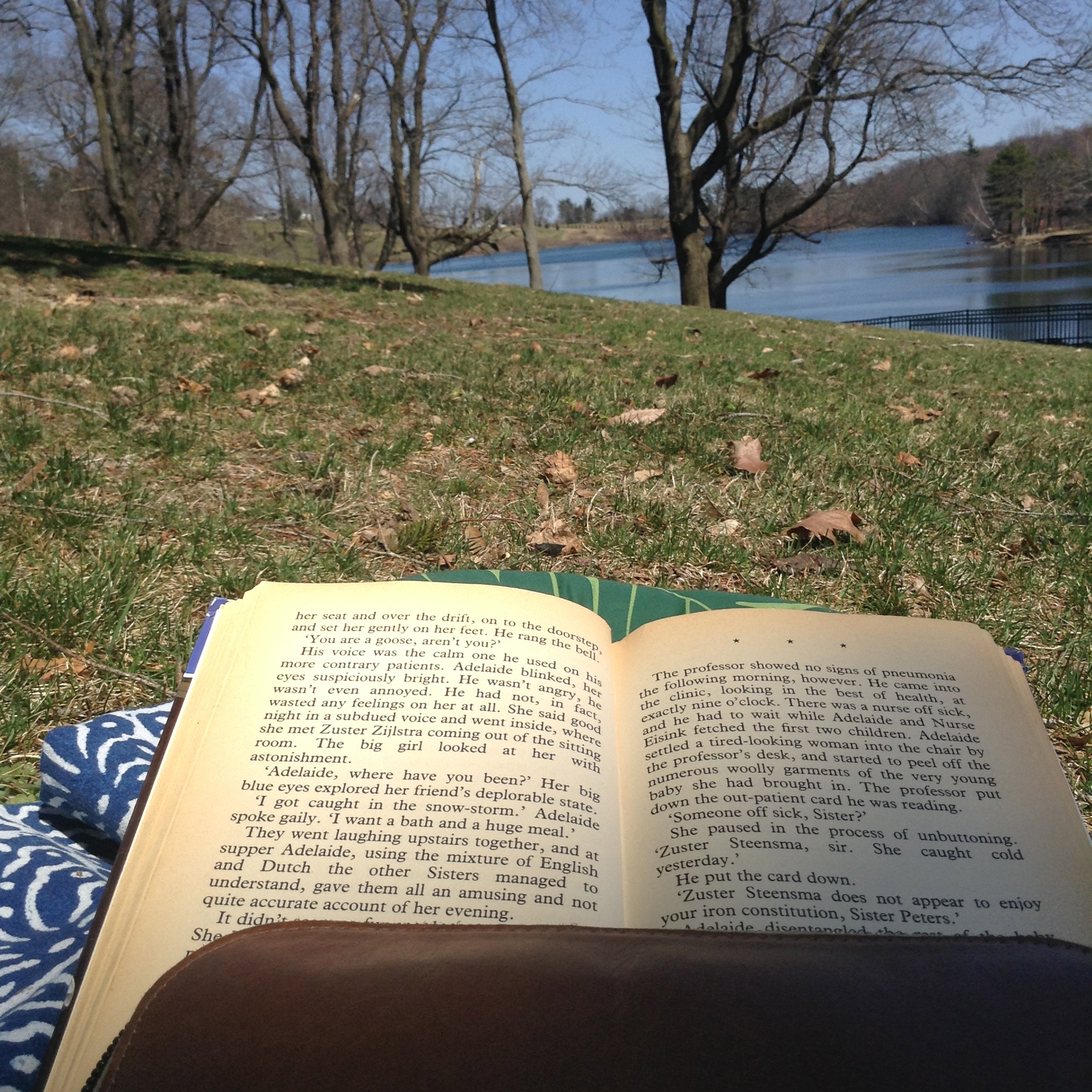
We’ve had glorious weather this past week. The snow has melted, birds are chirping, the first of the gentle buds are forming on the tips of branches. Nature is poised to leap into Spring. We went on a glorious picnic on the weekend. I read a Betty Neels book- ‘Sister Peters in Amsterdam’ on the picnic. I had never read Betty Neels before and was recommended this book by a friend on Instagram. When I received the book from the library I laughed at the funny cover design!

IMG_0470Since then I’ve read a couple of her books and have come to the conclusion that her stories  are a nice, very light read but are a tad formulaic. There is usually a young British nurse, a Dutch doctor and the romances are very genteel… at least the ones I’ve read. What I liked most were descriptions of food, nature, clothing and how charming the books are, if a little repetitive. They are set in interesting locations. Madeira, Amsterdam, Delft and rural England featured in the ones I read. The books are not always very complimentary to women, however. The women always forsake their careers for marriage- which seems to be the be all and end all purpose of life. So if you are willing to overlook the ‘datedness’ of these book you may enjoy them.

‘Whose Body’ by Dorothy L Sayers was my first book by this author who I have been meaning to read forever. I enjoyed the mystery aspect of the story and am eager to read more about Lord Peter Wimsey. Find the full review of the book here.

‘I Want my Hat Back’ by Jon Klassen was an interesting book for Little M. It was funny and quirky and just a tad cruel. Little M  did not fully comprehend the ending and I didn’t force the truth upon her.

Lastly we have been hooked on the dramatization of the Outlander. Last year I read the book and had mixed feelings about it. I loved the premise of the book- a woman slipping back into time several hundred years into medieval Scotland with a chance to change history. I found the book rather long and some of the descriptions gruesome but overall  I enjoyed it. When I saw the DVD at the library I leapt at the chance to see it. The picturization of rural Scotland is just captivating and the dramatization very well done. Cannot wait to catch up with the second half of the series which is airing now on television.

A good week. I will leave you with my journal entry for the cover of Sayer’s ‘Whose Body’

Processed with VSCOcam with c1 preset

Whose Body by Dorothy L. Sayers

IMG_0451

Title: Whose Body?

Author: Dorothy L Sayers

Published: 1923

Main Characters: Lord Peter Wimsey (amateur detective), Inspector Parker (Wimsey’s friend and accomplice), Inspector Sugg (Scotland Yard), Bunter -Lord Peter’s butler, a host of different suspects.

Book Setting: LondonEngland in the 1920s.

Short Synopsis of the Story:  The body of a man is discovered in the bathtub of a Mr. Thipps, wearing nothing but a pair of pince nez. Nobody knows anything about the identity of the man and even less about how he came to be in Mr. Thipp’s bathtub.On the same day that the body is discovered Sir Reuben Levy, a wealthy  financier goes mysteriously missing. Could the two incidents be connected? Lord Peter Wimsey puts his wits to the test in order to get to the bottom of the question, aided by Parker and his faithful butler Bunter.

Thoughts About the Book: I’m a great enthusiast of the mystery novel genre especially books that hail from the ‘Golden Age’ of detective fiction. It seemed natural that I should look towards the works of one of the stalwarts of the genre – Dorothy L Sayers herself. Initially I found the character of Peter Wimsey delightful but a tad superficial. He reminded me a little of Bertie Wooster with all the hallmarks of the English aristocracy. In the opening page, Sayer’s quirkily and memorably describes Wimsey’s appearance as follows:

His long, amiable face looked as if it had generated spontaneously from his top hat, as white maggots breed from Gorgonzola.

Lord Peter lives in a block of new expensive flats opposite Green Park, dines at the Club, buys expensive rare antiquarian books, plays the piano, keeps a butler and dabbles in detective work in his spare time to amuse himself. However, as the story progresses and more details of Wimsey’s character become apparent we start to gain a greater understanding for his actions and motivation in his life. Wimsey has a great regard and respect for his butler Bunter. We learn that they both were comrades in the Great War. Bunter is therefore privy to Wimsey’s weaknesses, especially his nightmares that are the result of shell shock during the war.

Wimsey is highly conscientious. When he finds himself deeply embroiled in the mystery, he confides in Parker-

“That’s what I’m ashamed of, really,” said Lord Peter.”It is a game to me, to begin with, and I go on cheerfully, and then suddenly see that somebody is going to be hurt, and I want to get out of it.”

Parker responds to Lord Peter-

‘Life’s not a football match. You want to be a sportsman. You can’t be a sportsman. You’re a responsible person.”

The ever jocular Peter Wimsey responds –

“I don’t think you ought to read so much theology,” said Lord Peter.”It has a brutalizing influence.”

Conclusion: Its very difficult to write a review of a mystery story without giving something away but I will say that Sayer’s presents an intelligent plot in this mystery novel. What sets Sayers apart from others is the depth of her intelligence. This is evident in her wit and her ability to humanize a character. By the end of the novel not only do we start to respect Lord Peter Wimsey but we are also eager to learn more about his character and all his future detective endeavors. A great start to a detective series.

I Want My Hat Back by Jon Klassen

Processed with VSCOcam with f2 preset

Title: I Want My Hat Back

Author and Illustrator: Jon Klassen

Published: 2011

Main Characters: A bear, a rabbit, a pointed red hat and several woodland characters.

Short Synopsis of the Story: A bear has lost his hat. He politely asks several woodland creatures that he passes whether they have seen his hat or not. One particular woodland character, a rabbit (wearing a pointed red hat) rather strongly denies that he has stolen the hat and quickly dismisses the bear. Later on the bear rather sadly lies down on the ground and worries he may never see his hat again. One woodland creature comes up to him and asks him what the hat looks like. The bear says it is red and pointed and only then is struck with the thought that he has seen the hat recently on someones’s head! He travels back to the rabbit and accuses him of stealing the hat.

Next we see the bear sitting down with the hat back on his head. A passing squirrel asks the bear if he has seen a rabbit. The bear protests very loudly that he has neither seen nor eaten a rabbit. He asks the squirrel not to ask him anymore questions.

Conclusion: I enjoyed the part of the story where the rabbit and the bear protest too loudly especially when they are in the wrong. This made me laugh. However, the fact that the bear had eaten up the rabbit to retrieve his hat was a hard story to deliver to my three year old. When I told her, she very aptly responded with,”Did he need to eat the rabbit up?”

Did he indeed?

The Story of Ferdinand by Munro Leaf

Processed with VSCOcam with t1 preset

Title: The Story of Ferdinand

Author: Munro Leaf

Illustrator: Robert Lawson

Published: 1936

Main Characters: Ferdinand the bull.

Short Synopsis of the Story: The story is set in Spain. Ferdinand the bull is a placid creature. When his fellow bulls are busy playing aggressive games and fighting with one another, nothing pleases Ferdinand more than to sit  quietly by himself and enjoy the scent of the flowers. One day when Ferdinand is much older, several men arrive form Madrid to pick a bull for the fighting. They try to pick the most aggressive bull. On that particular day Ferdinand gets stung by a bee and jumps up and down like crazy. The men from Madrid think he will be the perfect bull for the bullfight and pack him into a cart to be taken to Madrid. On the day of the bullfight, the stadium is packed with excited onlookers. The Banderilleros, Picadores and Matadors enter the stadium and are shivering with anticipation and fear. At last Ferdinand emerges into the ring and to everyones surprise sits down quietly and sniffs the fragrance of the flowers in the ladies’ hair. There is no bull fight that day and Ferdinand is escorted back home where he continues to lead a peaceful life.

Favorite Part of the Story: The message of non- violence is an important one to be taught to children from an early age but I think the concept of bull fighting was beyond the scope of my three year olds understanding. Nevertheless, a worthwhile read to go back to in a couple of years I think.